
Last updated November 25, 2026
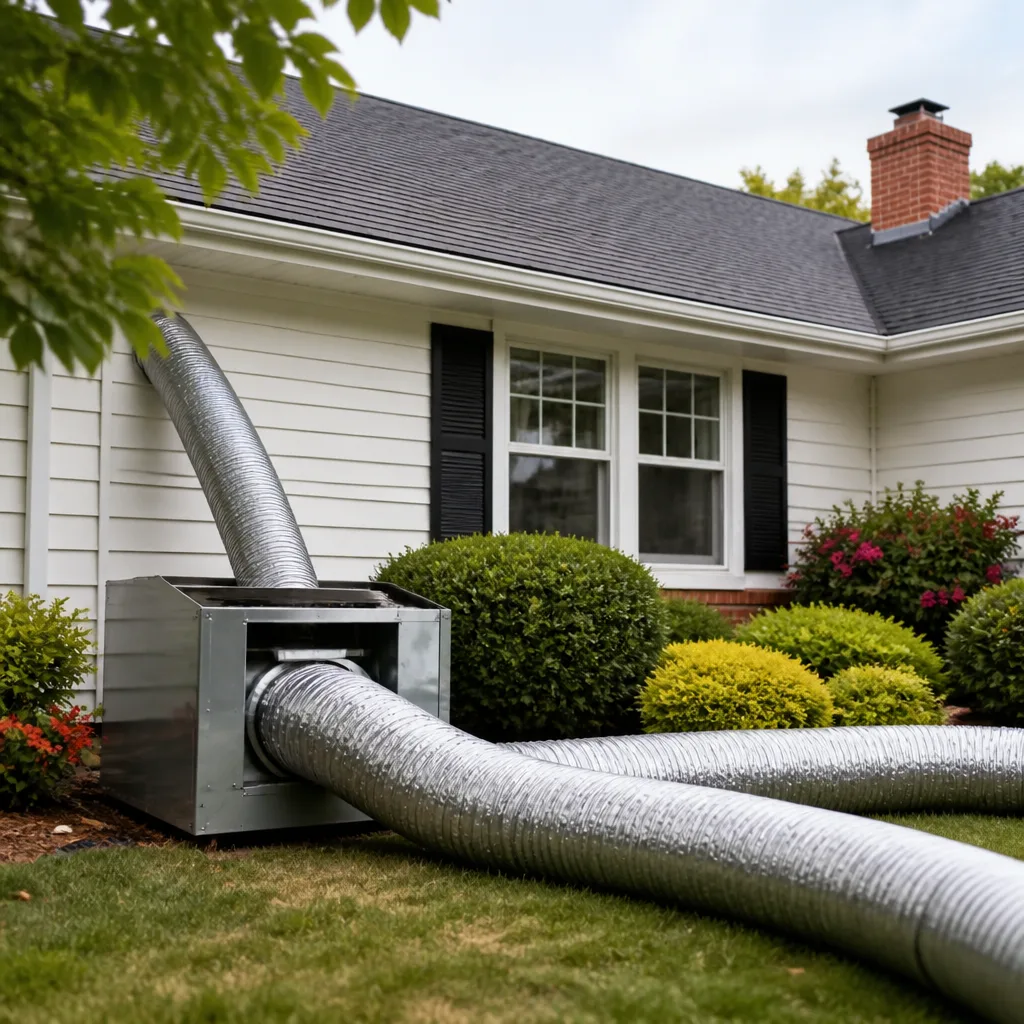 Whole-home duct cleaning
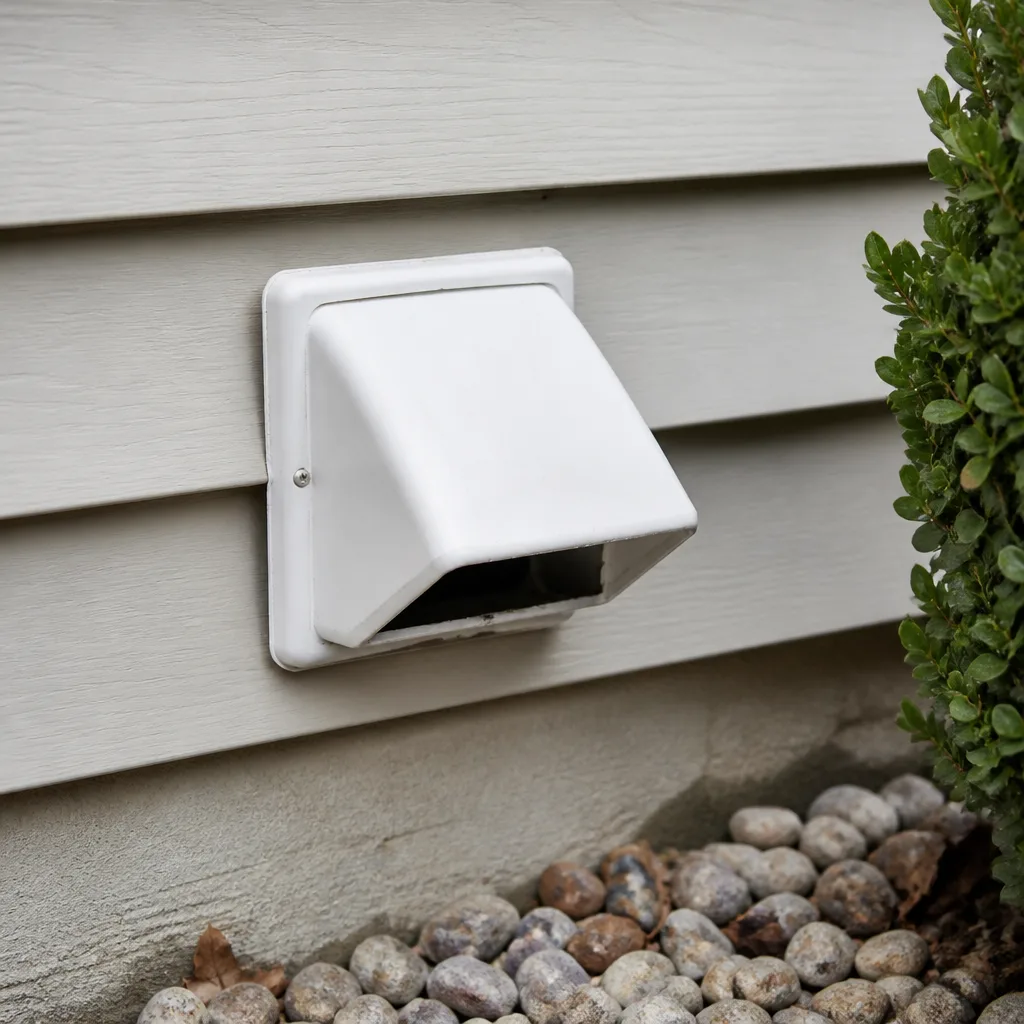 Dryer vent cleaning
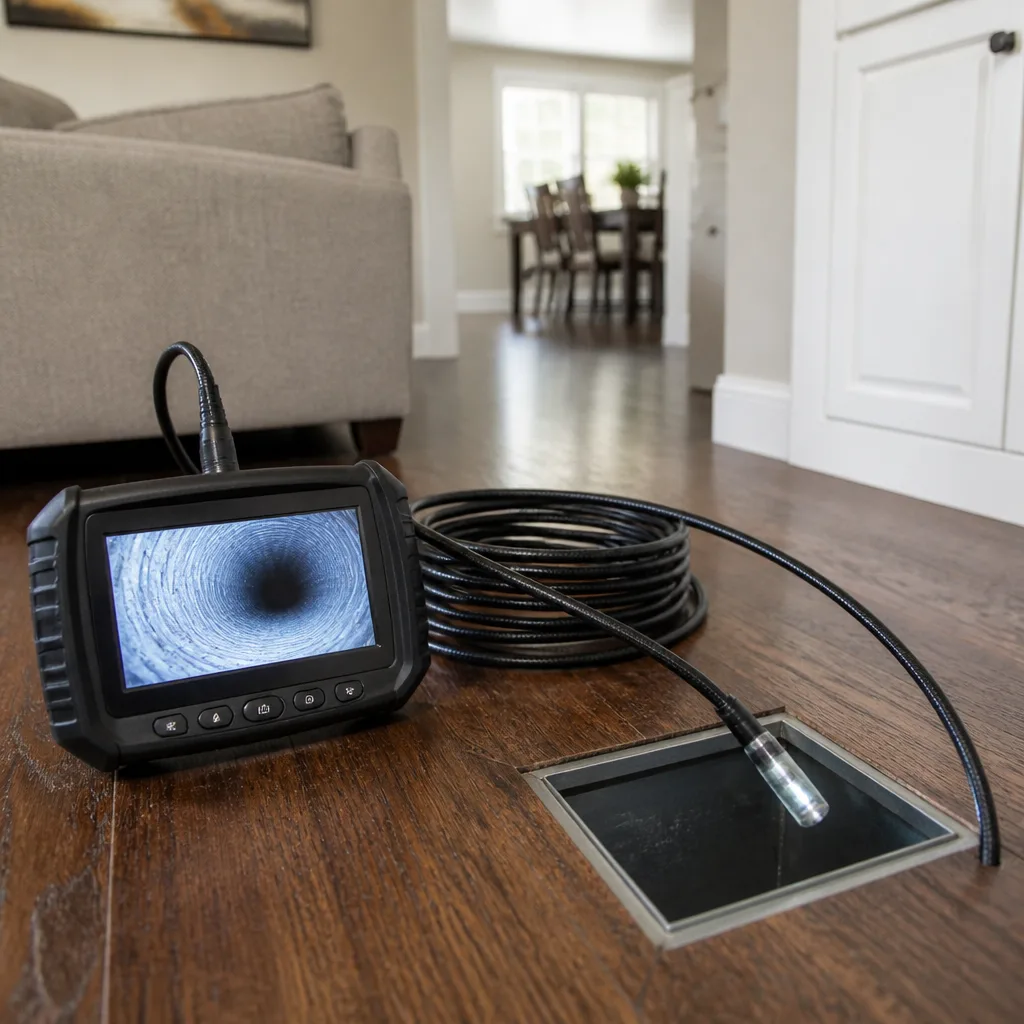 Camera inspection
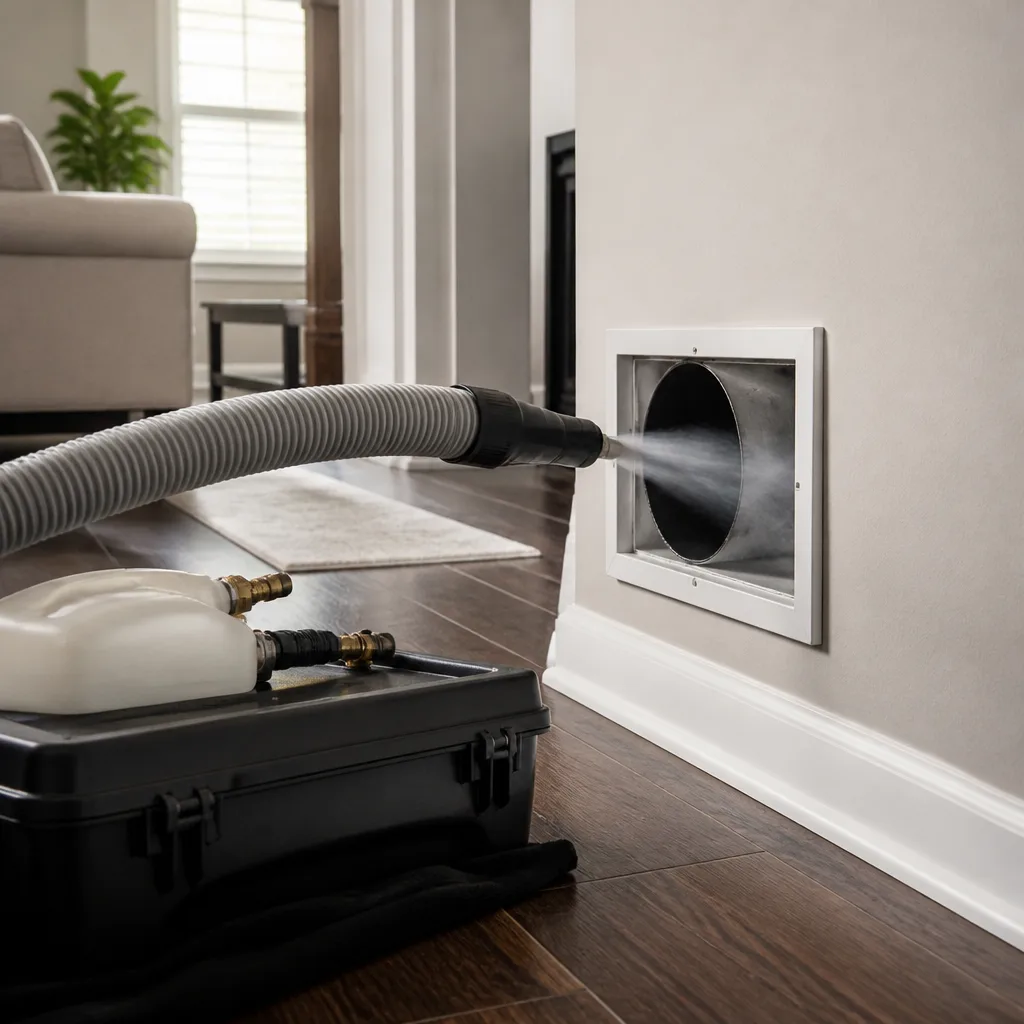 Sanitizing & deodorizing
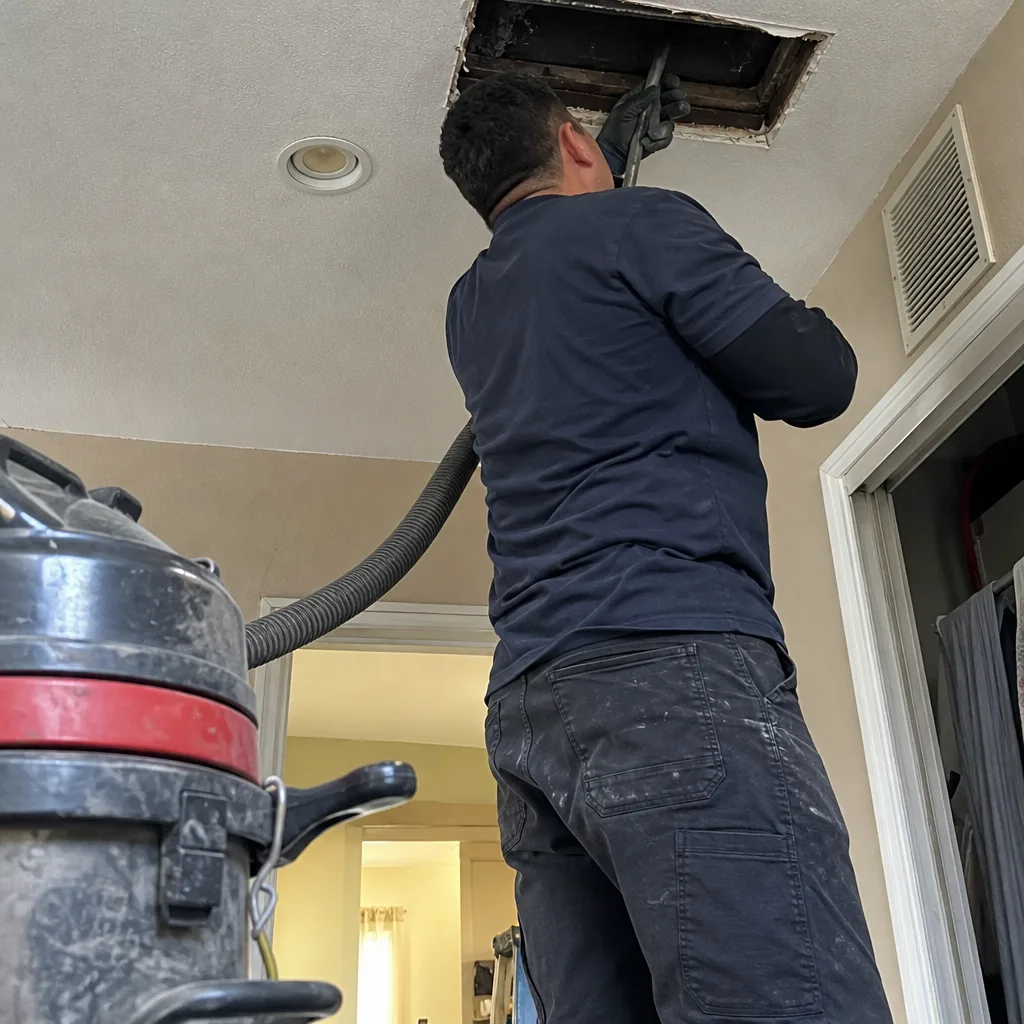
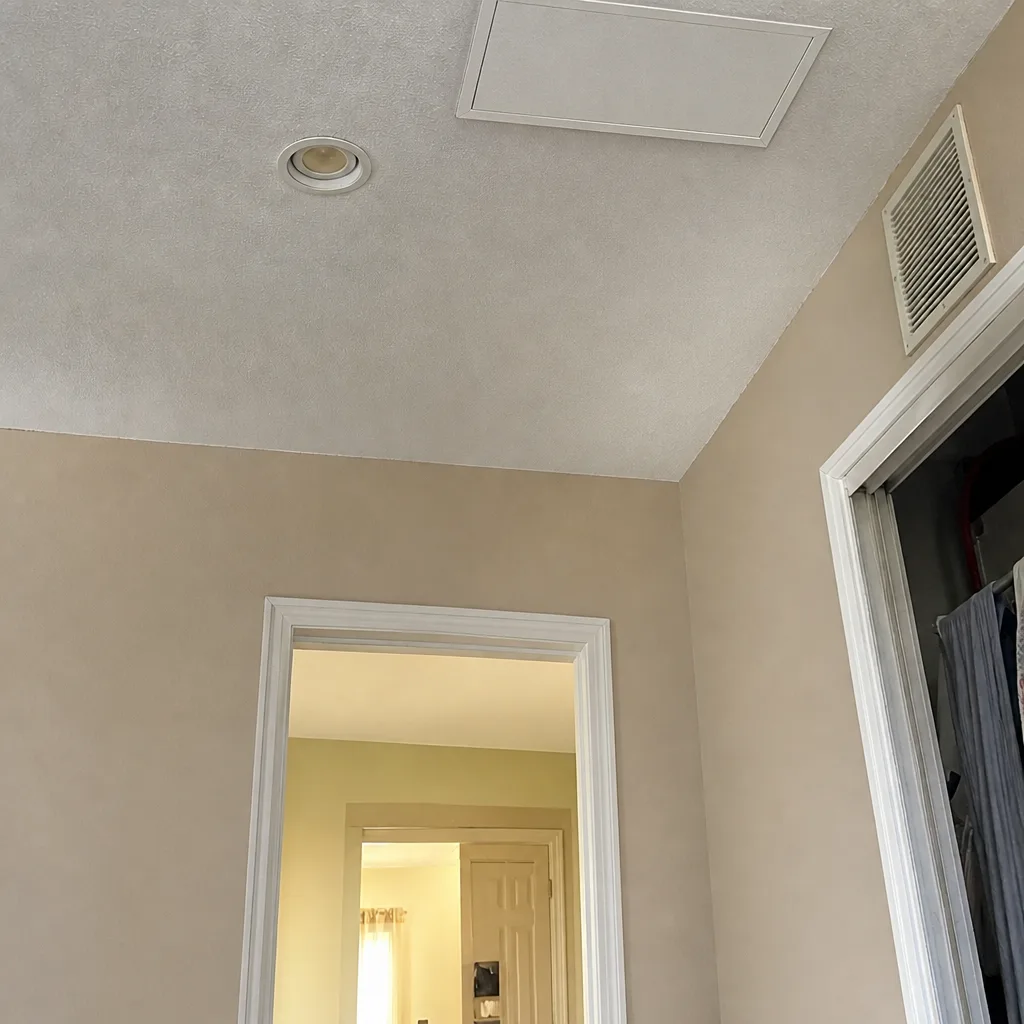
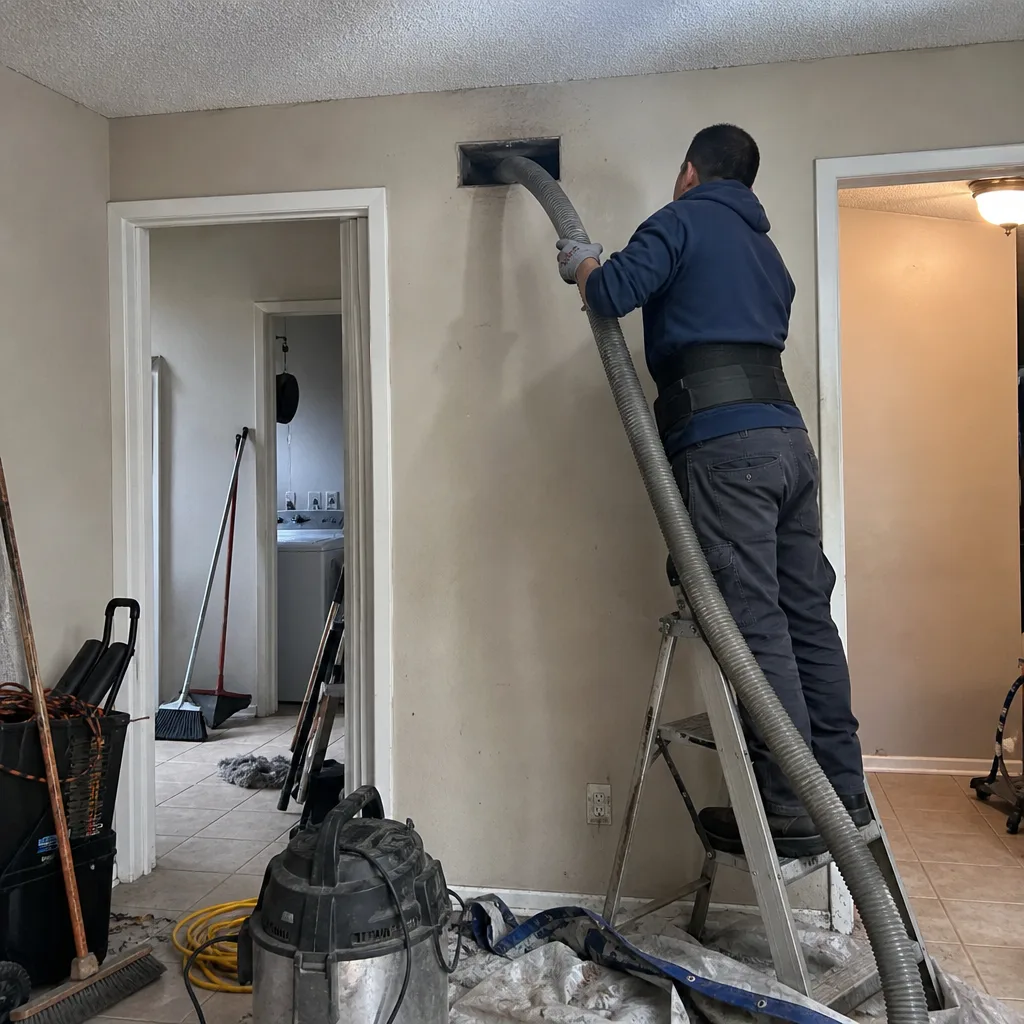
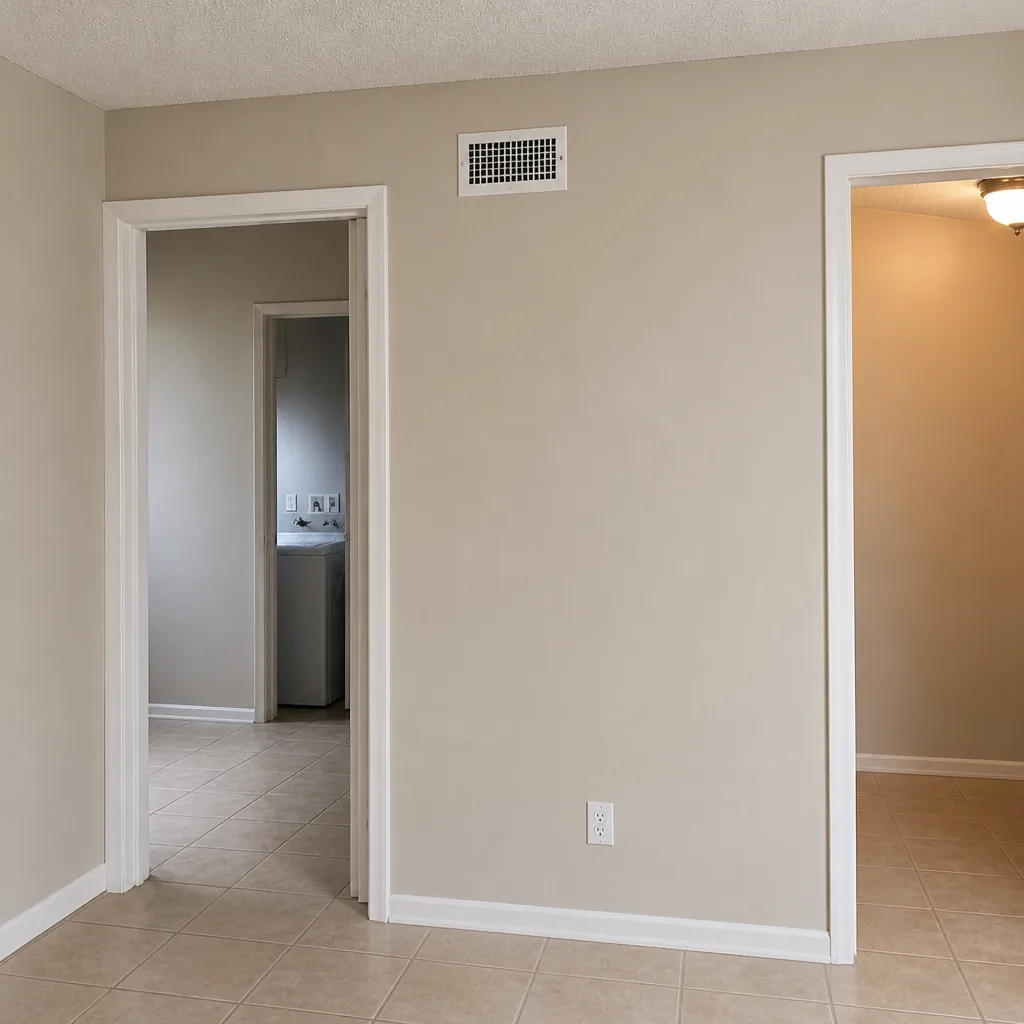
Whole-system duct and dryer vent check with before-and-after photos - you see exactly what came out of your vents
That "$99 whole-house special" is a bait ad - the real number appears once they are in your hallway, or the "clean" is a shop-vac at the register. We photograph the inside of your ducts before and after instead.
DIY vs Professional Air Duct Cleaning: The Westminster Homeowner’s Decision Guide
The question isn’t whether you’re capable of cleaning your own ducts. Most Westminster homeowners who ask are perfectly handy, and plenty of them have already pulled a register grille and looked inside with a flashlight. The real question is whether the tools available to a consumer can actually move what’s in there, or whether they loosen debris and pull it deeper into the branch lines where you’ll never see it again. A shop vacuum and a rotary brush kit feel like they’re doing something because they make noise and pick up dust. The numbers tell a different story, and that gap between the felt experience and the measured one is what this guide is about. We’ll walk through what consumer tools can genuinely handle, which jobs a homeowner should keep, which ones a homeowner should never attempt, and how to map your own system’s condition onto a clear recommendation. Westminster has its own housing stock and its own air, and both matter here.
Styles & brands we work with
- Whole-home duct cleaning
- Dryer vent cleaning
- Camera inspection
- Sanitizing & deodorizing
Quick Answer
Professional air duct cleaning is the right call for any system with visible debris past the register, suspected mold, flex duct, or post-renovation dust, because consumer equipment can’t generate the negative pressure needed to capture loosened particles before they resettle. DIY is genuinely effective for a narrow set of tasks: washing register grilles, replacing return air filters, and doing visual inspections at accessible openings. Everything in between depends on your specific system, and the decision framework below tells you where you fall.
Table of Contents
- What consumer duct cleaning tools can and cannot do
- The CFM gap: why 150 doesn’t equal 3,000
- The DIY tasks that are genuinely worth doing
- When DIY makes things measurably worse
- The access equipment reality in Westminster homes
- A decision framework for your system
- What a professional service actually involves
- Common mistakes to avoid
- When to call a professional
- Frequently asked questions
- The bottom line
What Consumer Duct Cleaning Tools Can and Cannot Do
A consumer duct cleaning kit typically contains a flexible rod, a small brush head, and an adapter for a shop vacuum. The brush is meant to agitate dust off the duct walls. The vacuum is meant to pull it out. In practice, the brush does agitate surface debris near the register, and the vacuum does capture some of it. What neither tool does reliably is generate the sustained negative pressure that keeps loosened particles moving toward the vacuum rather than away from it.
Here’s the mechanism that matters. When you agitate dust inside a duct with a spinning brush, you break the bond between the dust and the metal or flex liner. That dust is now airborne inside a closed channel. If the vacuum at the register can’t pull harder than the natural airflow is pushing, a portion of that material drifts back down the branch line, past the register, and settles in a spot you can’t reach. You’ve moved the problem.
What consumer tools can do:
- Remove loose debris from the first few feet of a straight duct run
- Loosen caked dust from a register boot and the adjacent duct wall
- Lift dust off the surface of a metal supply trunk where the run is short and accessible
- Remove dust from the return air grille and the immediate cavity behind it
What consumer tools cannot do:
- Maintain negative pressure across an entire duct system during agitation
- Reach around tight elbows, offsets, and long flex runs
- Extract debris from the HVAC cabinet, evaporator coil, or plenum
- Capture the fine particulate that stays suspended after the vacuum stops
- Address mold growth on the interior surface of a flex liner
The CFM Gap: Why 150 Doesn’t Equal 3,000
This is the single number that separates a consumer job from a professional one, and most DIY guides skip over it. Professional truck-mounted vacuum systems operate at roughly 2,000 to 4,000 cubic feet per minute of negative pressure. A shop vacuum operates at approximately 100 to 150 CFM. The difference isn’t a matter of degree. It’s a different physical regime.
At 2,000 CFM or more, the air velocity inside a residential duct run is high enough to entrain loose dust and carry it into the vacuum. The agitation tool and the vacuum are working together: the brush lifts material, and the airflow immediately captures it and moves it out. At 100 to 150 CFM, the airflow is closer to the velocity the furnace itself generates during normal operation. That means the loosened dust is not being pulled any faster than the system’s own blower would move it, and the system isn’t running while you’re cleaning, so the dust simply settles.
| Tool | Typical negative pressure | What that means in practice |
|---|---|---|
| Shop vacuum | 100-150 CFM | Captures debris at the nozzle; cannot hold an entire duct run under negative pressure |
| Portable duct cleaning unit | 300-700 CFM | Handles short runs and register boots; loses effectiveness on longer systems |
| Professional truck-mounted vacuum | 2,000-4,000 CFM | Holds the whole system under negative pressure while agitation tools run inside |
In our experience working Westminster duct systems, the homes that show the most debris re-deposited in branch lines are the ones where a homeowner did a thorough DIY agitation without the airflow to capture what broke loose. We use Rotobrush rotary brush systems paired with Nikro HEPA-rated vacuum equipment precisely because the two tools have to be matched to each other, not used separately. The brush agitation and the extraction are one operation.
The equipment takes up the whole picture, and so does access. If you have a question about your own system’s condition, our air duct cleaning page walks through the process. For help mapping the CFM gap onto your home, call (855) 550-7935.
The DIY Tasks That Are Genuinely Worth Doing
Some DIY air duct maintenance is low-risk, genuinely effective, and takes ten minutes. These are the tasks to keep on your calendar as a Westminster homeowner.
- Remove and wash the register grilles. The supply and return grilles on your floor or wall collect a visible layer of dust that filters down from the room. Pop them off (most are held by two screws or friction clips), wash them in a sink with dish soap, dry them fully, and reinstall. This is real work that improves airflow and reduces what gets recirculated, and there’s no way to cause harm.
- Replace the return air filter on schedule. The filter is the primary defense line for the whole air pathway. A clogged filter forces the system to work harder and lets more dust past the coil, where it becomes the material that eventually cakes the duct interior. Use the filter your system specifies, and change it when the manufacturer’s interval says or when it visibly loads up.
- Do a visual inspection at accessible openings. Shine a flashlight into the register boot after you remove the grille. You can see the first several feet of the duct in most homes. Look for dust accumulation, dark staining on flex liner, debris that looks like construction dust, and any odor. This isn’t cleaning. It’s diagnosis, and it’s genuinely useful information to bring to a professional estimate.
- Clear the dryer vent screen. The lint screen in the dryer is not a substitute for full dryer vent cleaning, but emptying it every load is a real safety habit. Lint accumulation across a dryer vent run is a fire risk, and the screen is the first barrier.
- Wipe down accessible filter grille frames. The frame the filter sits in collects dust around its edges. Wiping it down when you change the filter is fast and keeps the dust from building up into the return cavity.
These five tasks are the honest DIY toolkit. Everything else, in our experience, either requires equipment a homeowner doesn’t have or introduces a meaningful risk of making the problem worse.
When DIY Makes Things Measurably Worse
There are three system conditions in Westminster where DIY duct cleaning isn’t merely ineffective. It causes damage that a professional then has to correct, and sometimes the correction costs more than the original cleaning would have.
Flex duct systems
Flex duct has a thin plastic inner liner inside a helical wire coil, wrapped in insulation. The liner is around 4 to 8 mils thick in most residential construction, and it tears easily. When a rotary brush or a hand-powered rod with a stiff brush head is run through a flex run with an offset or a bend, the bristles abrade the liner. Over a few passes, the liner develops small tears or pulls away from the coil. Each tear is a future leak point: air escapes into the wall or attic cavity, the room gets less conditioned air, and the system works harder to compensate. A flexible duct run in a Westminster home’s interior wall cavity is not a setting for a consumer brush kit. This is one of the situations where we typically see a homeowner call us after a DIY attempt, and the duct repair and sealing work becomes the larger part of the job. If your duct runs are flex, and most homes built after the mid-1980s in Westminster have at least some flex, treat aggressive interior brushing as off-limits.
Systems with suspected mold growth
Dark staining on the duct liner, a musty smell when the system runs, or visible spots near the register boot all point to moisture and microbial growth. Agitating a mold-colonized duct with a consumer brush puts spores into the airstream without capturing them. A HEPA-rated vacuum and a filtration setup like Abatement Technologies air filtration equipment are needed just to handle the extraction safely, and sanitizing with a treatment like the Guardsman-grade products we use addresses the underlying colony. A shop vacuum with a shop-grade filter does not contain spores, and it can redistribute them through the room. This is a professional-only condition.
Post-renovation debris loads
If you’ve just finished a kitchen remodel, a bathroom renovation, or a flooring project, drywall dust, sawdust, and construction grit have been pulled into the return air system and deposited throughout the ductwork. That debris load is heavier and more abrasive than normal household dust, and it settles in places a consumer tool can’t reach. Agitating it with a home brush loosens it and pulls more of it into the branch lines. In our experience, post-construction duct cleaning needs the filtration capacity of equipment like Abatement Technologies units, not a consumer shop vacuum, because the load is high and the fine particles stay airborne.
The Access Equipment Reality in Westminster Homes
A duct cleaning job succeeds or fails on access and extraction. Professional equipment isn’t just bigger; it’s designed around a different problem. An extraction unit pulls on the whole system from one point, usually at the main trunk or the air handler, while an agitation tool runs inside the duct, breaking material loose. The negative pressure captures it at the source.
The agitation tools themselves vary by duct type. A metal trunk responds well to a rotary brush. Flex duct needs a softer tool, often a whip or a forward-air nozzle, that agitates without contacting the liner. The professional toolkit holds both. A homeowner toolkit holds one brush head.
Westminster’s housing mix matters here. The city has a substantial stock of mid-century single-family homes alongside newer construction and a large share of apartments and condos, and the duct systems vary widely because of it. Older homes often have original metal ductwork with rigid trunk and branch runs and register boots in the floor. Newer construction more often runs flex duct through interior wall chases and attic cavities. Condos and apartments have shared chases and short runs with tight elbows where access matters more than tool aggression.
Mild Westminster winters mean the heating system gets moderate use and the air conditioning system gets substantial use, so the ducts carry a higher proportion of cooling-season air. Cooling air is cooler and more humid than heated air, and that combination encourages dust to adhere to duct surfaces rather than stay airborne. Dust that adheres to the interior wall of a supply trunk is exactly the debris a rotary brush and a high-CFM vacuum are designed to break loose and capture. A shop vacuum with low CFM can break the adhesive bond with a brush, but it can’t capture the result.
That equipment pairing is why we run Rotobrush and Nikro systems together. It’s also why we can address the full system, including the HVAC cabinet, plenum, and coil, which consumer tools can’t reach at all. Our HVAC cleaning service covers that portion of the work, and it’s often the part of the system with the most accumulation.
A Decision Framework for Your System
The DIY versus professional decision comes down to four questions. Answer them in order, and you’ll land on a clear recommendation.
1. What’s the symptom?
- Visible dust on grilles, no other sign – DIY register cleaning and filter replacement will likely resolve it.
- Musty or stale smell when the system runs – professional inspection needed; possible mold or moisture issue.
- Reduced airflow at some registers – could be a filter, could be a leak or blockage; professional inspection can tell you which.
- Recent renovation or move-in – professional cleaning appropriate; the debris load is higher than normal and DIY tools can’t reach it.
- Allergy symptoms that spike when the system runs – professional inspection and cleaning warranted; possible mold or heavy dust load in the return.
2. What’s the system age?
A system under 10 years old with regular filter changes likely needs register-level maintenance only. A system over 20 years old may never have been professionally cleaned, and the accumulation in the trunk and plenum is likely substantial. Older homes in Westminster with original metal ductwork are the category most likely to benefit from a professional cleaning because the debris volume is higher and the metal surfaces respond well to rotary agitation.
3. When was the last professional service?
If the system has never been professionally cleaned, or if the last cleaning is more than 3 to 5 years in the rearview, an inspection is worth having. The question of how often professional cleaning is actually needed depends on the specific system: pets, allergies, recent renovation, and smoking all shorten the interval. A home with multiple pets and an allergy sufferer may need attention every 2 to 3 years; a home with none of those factors may go much longer.
4. Are you troubleshooting or maintaining?
Maintenance is regular, low-stakes, and a good fit for the DIY tasks listed above. Troubleshooting is diagnosis, and diagnosis benefits from the equipment and the trained eye. If you’re asking “why is this happening?” rather than “how do I keep this clean?”, that’s a professional call.
What a Professional Service Actually Involves
A professional air duct cleaning in Westminster typically follows a structured sequence. Knowing what should happen on a job helps you compare estimates and understand what you’re paying for.
- System inspection before any cleaning starts. The technician checks duct type (metal vs flex), run lengths, register count, the HVAC cabinet and coil condition, and the filter state. Problem areas get noted and photographed.
- Negative pressure established at the extraction point. A truck-mounted or portable high-CFM unit connects at the main trunk or air handler, pulling the entire system into negative pressure before agitation begins.
- Agitation runs the length of each duct. Rotary brush on metal, softer tools on flex. Every branch line gets worked so that the debris comes loose while the vacuum is pulling it out.
- HVAC cabinet and coil cleaning. The area around the blower, evaporator coil, and plenum is where the most dust accumulates and where consumer tools can’t reach. A full-system cleaning includes this.
- Repair and sealing where leaks are found. Duct cleaning without addressing leaks is a partial job. Sealing leaks at joints and register boots keeps the conditioned air in the duct and the debris out of the walls.
- Sanitizing where needed. A Guardsman-grade sanitizing treatment addresses microbial growth and residual odor after cleaning. It isn’t part of every job, but it’s appropriate for systems with mold or heavy odor.
- Before-and-after photo documentation. Ask for it. A professional cleaning should be documented, and you should be able to see what came out of the system.
We work with Honeywell and Aprilaire filtration and humidity products when a home needs more than cleaning alone. A filtration upgrade at the return can meaningfully reduce the dust load that reaches the ducts, and humidity control matters in Westminster’s mild but humid cooling season. That scope is a different conversation than a cleaning estimate, but it’s worth knowing that the path exists.
If you want to compare what we do against a typical DIY approach, our Westminster Air Duct Cleaning Co page lays out the service categories and the equipment we use. Call (855) 550-7935 for a free estimate.
Common Mistakes to Avoid
- Running a stiff brush through flex duct. The liner tears under sustained abrasion, and the damage is inside a wall cavity where you won’t see it until the airflow drops or a leak develops. Flex duct needs a soft whip or an air nozzle, not a bristle brush.
- Assuming the shop vacuum filter captures fine dust. A standard shop vacuum filter stops larger particles and passes the fine fraction that the human respiratory system is most sensitive to. The fine dust is the particle size that matters most for allergy and asthma symptoms.
- Skipping the filter change before cleaning. Cleaning a system with a loaded filter just sends the loosened debris toward a filter that can’t accept it. Change the filter first, then clean.
- Treating a musty smell with febreeze or a scented spray. Odor masking addresses what you can detect, not what’s causing it. Persistent smell from the ducts means moisture or microbial growth, and masking it means the source keeps growing.
- Cleaning only the supply registers and ignoring the return. The return air side of a Westminster system typically carries the highest dust load because it pulls air from the home with no filter in between. A return-side cleaning is half the job and often the more important half.
- Using a leaf blower or compressed air to “blow out” the ducts. This is one of the worst possible approaches. It pressurizes the system, driving debris into the room, into the coil, and into branch lines. It can push material into the HVAC cabinet where it becomes a coil fouling problem.
- Assuming a low-price coupon reflects the real cost. Duct cleaning estimates that start very low typically add line items for register count, return-side work, HVAC cabinet cleaning, and sanitizing once the technician is on site. Ask for a flat number per system before work begins, with the scope written down.
When to Call a Professional
Call a professional if any of these apply: visible debris past the register, a musty smell when the system runs, visible dark staining on the duct liner, ongoing allergy symptoms that worsen when the HVAC runs, a recent renovation or move-in with unknown duct history, a flex duct system that’s never been professionally serviced, or a system that’s more than 3 to 5 years past its last professional cleaning. These aren’t jobs a consumer tool can complete, and attempting them risks moving the problem deeper into the system. Westminster Air Duct Cleaning Co offers free estimates in Westminster. Call (855) 550-7935. We answer 24/7. Fast dispatch from 7am to 7pm, Sunday through Friday. One flat price per system, agreed before work starts, with before-and-after photos of your own ducts.
Frequently Asked Questions
You can remove surface dust from the first few feet of a duct run, and that’s roughly where the capability ends. A shop vacuum generates about 100-150 CFM of negative pressure against the 2,000-4,000 CFM a truck-mounted professional unit produces, and that gap means loosened dust resettles in the system rather than getting captured. For anything past the register boot, DIY is not effective. Call (855) 550-7935 for an exact quote – estimates are free.
Duct cleaning in Westminster typically ranges from a few hundred dollars for a standard single-system residential job up to well over a thousand for a larger home with multiple HVAC systems, heavy debris, or repair and sealing work. The final price depends on system size, register count, duct type, and whether the HVAC cabinet and coil need cleaning. The written estimate sets the final price, one flat number per system before any work starts.
Very low estimates usually cover only a subset of the work: supply-side cleaning without the return, register-level work without the HVAC cabinet, and no documentation of the result. The line items for return-side cleaning, HVAC cabinet and coil cleaning, and sanitizing get added once the technician is on site. Ask for a flat per-system price with the whole scope in writing, including before-and-after photos of your own ducts. Call (855) 550-7935 to compare against a full-scope estimate.
Ask for before-and-after photos of your own ductwork, not stock images. A professional job should also include a walkthrough of what was found and what was cleaned, plus visible confirmation at the register boots after the extraction. Our technicians have up to 11 years of experience and work with Rotobrush and Nikro equipment; we can show you exactly what we found and what came out. Call (855) 550-7935 for an estimate on a documented full-system clean.
Most Westminster homes fall into a 3-to-5-year interval for professional cleaning, with a shorter interval for homes with pets, allergy or asthma sufferers, recent renovation, or smoking. A home with none of those factors may go much longer. Register cleaning and filter changes, though, are worth doing on the manufacturer’s schedule year-round. If it’s been more than 5 years since the system was last cleaned, an inspection is worthwhile. Call (855) 550-7935 for an exact quote.
DIY duct cleaning itself is not usually directly dangerous, but it can be counterproductive in specific systems. The real risk cases are flex duct (brush agitation tears the liner), suspected mold growth (consumer filters don’t contain spores), post-renovation debris (heavy loads overwhelm a shop vacuum and redistribute fine particles), and any attempt to blow out the ducts with compressed air or a leaf blower. For those systems, call (855) 550-7935 rather than attempting it yourself.
The Bottom Line
The decision isn’t about whether you can handle a project. It’s about whether the tools can do the job the system needs. Consumer duct tools work for register cleaning, filter changes, and visual inspection, and those are worth keeping on the schedule. Anything past the register boot, anything on flex duct, anything with a musty smell, and anything post-renovation belongs in the hands of someone with equipment that can hold the whole system under negative pressure while it agitates and extracts. Our view is simple: we use Rotobrush and Nikro equipment because a shop vacuum at 150 CFM can’t do what 3,000 can. When your duct cleaning job calls for a professional, that’s where you’re getting the value. For a free estimate, we’re happy to walk through your system with you. If you’re unsure where your own home falls, our team is ready to help.
Written by the team at Westminster Air Duct Cleaning Co.
See the difference
 Before
 After
 Before
 After
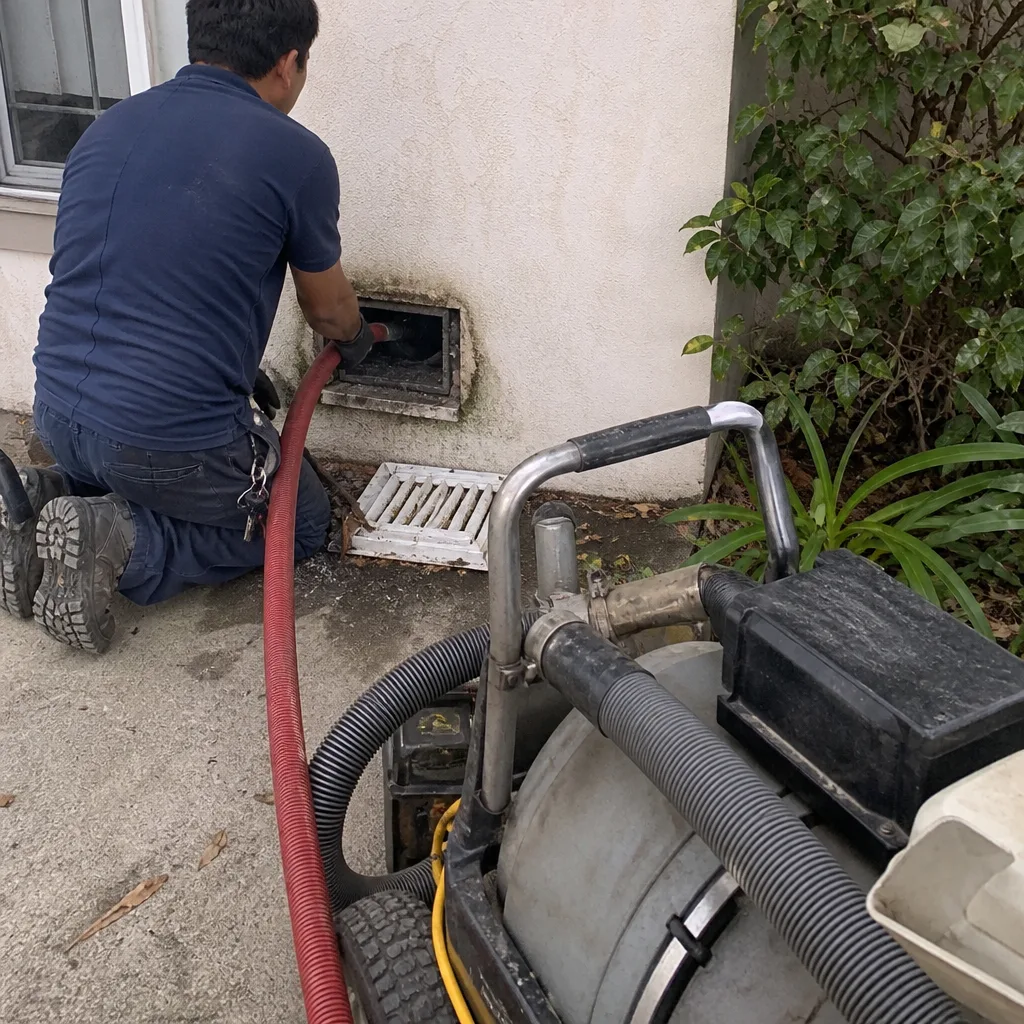 Before
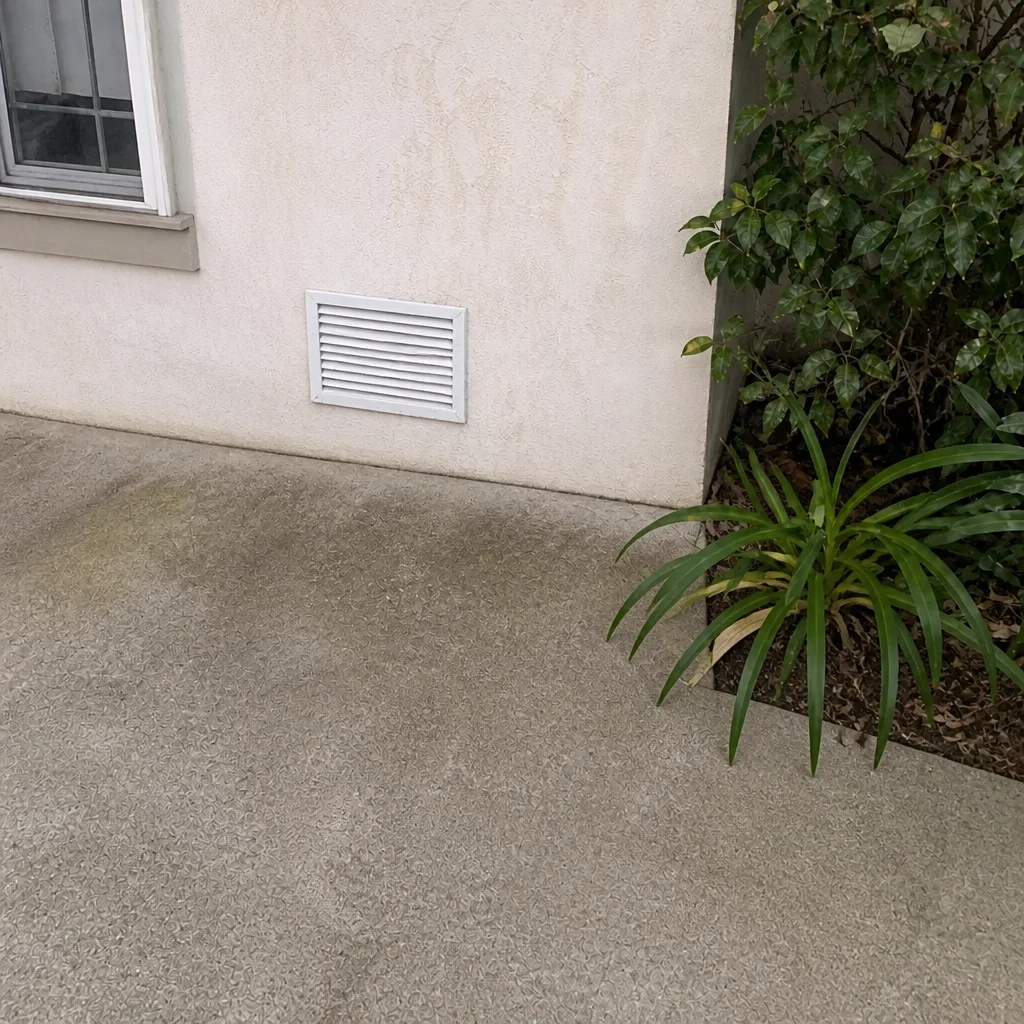 After