
Last updated November 25, 2026
 Whole-home duct cleaning
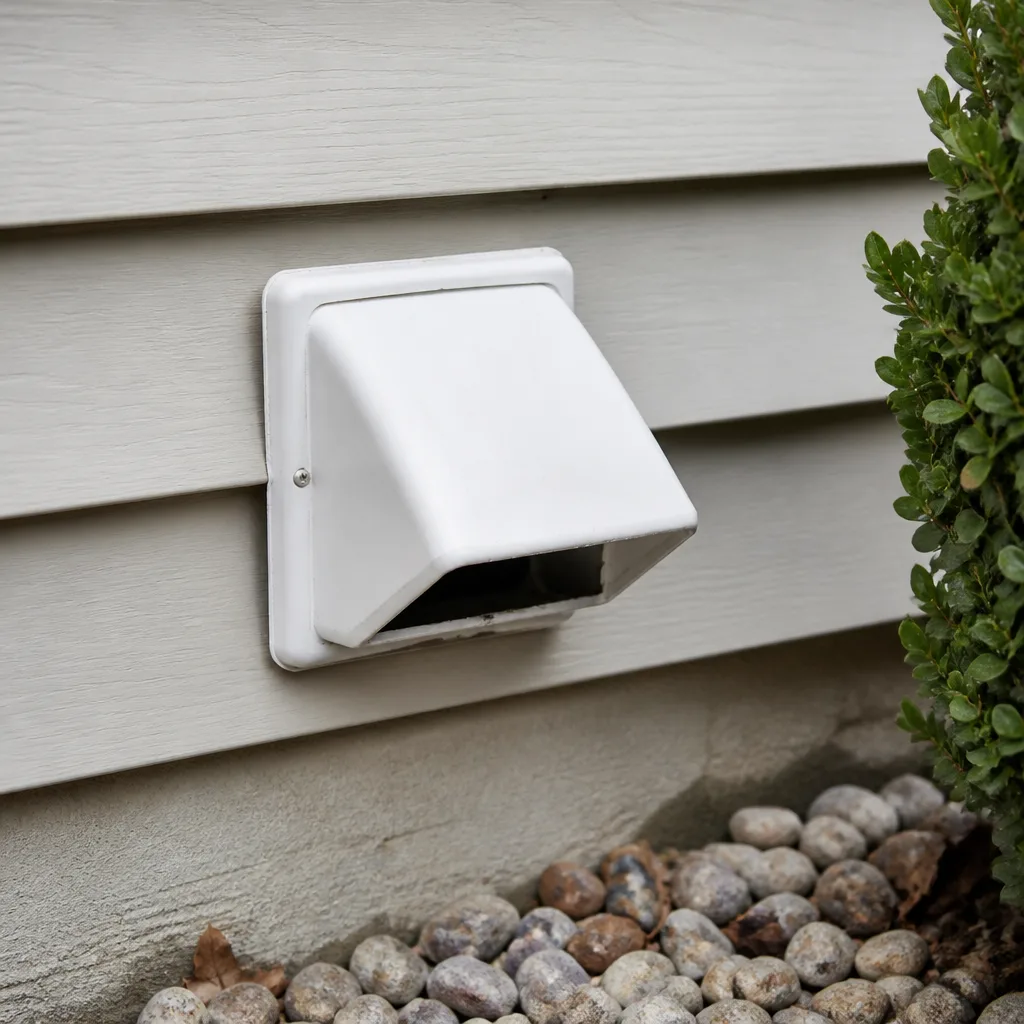 Dryer vent cleaning
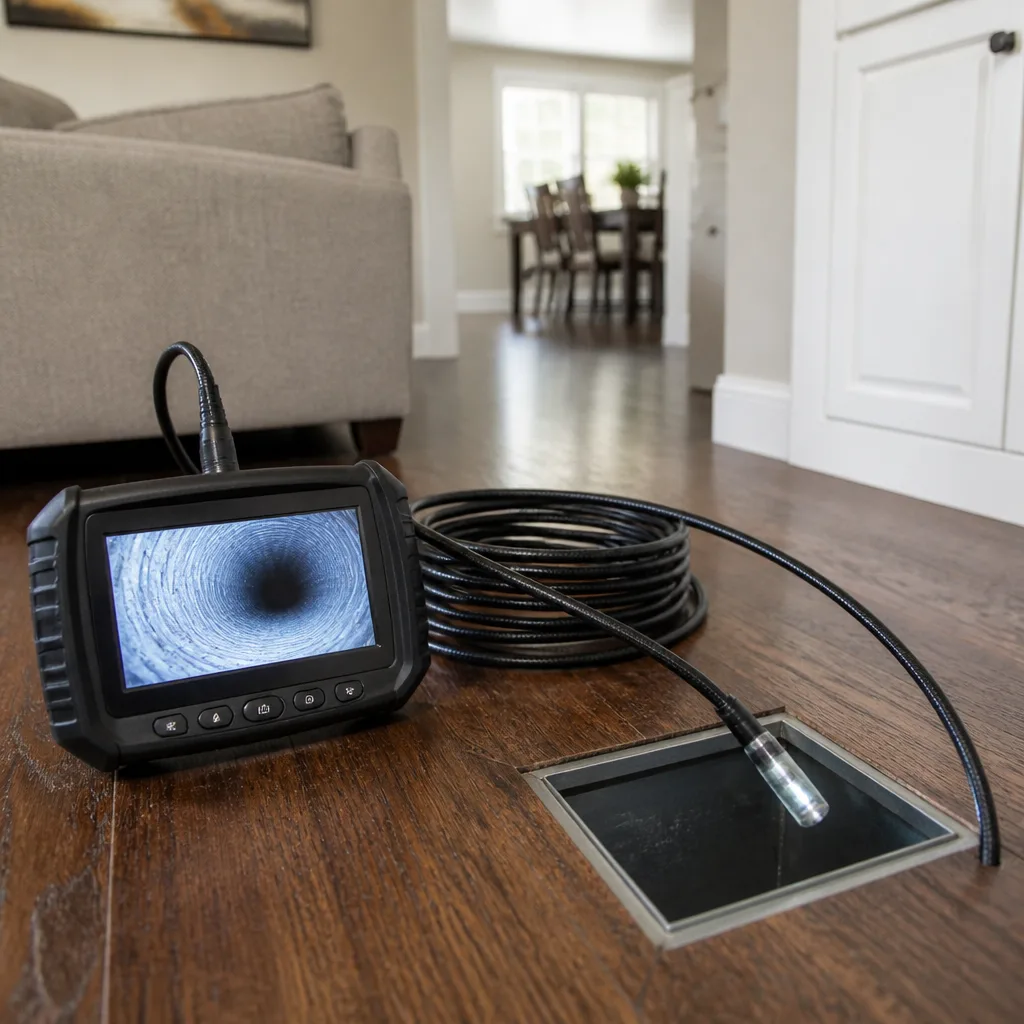 Camera inspection
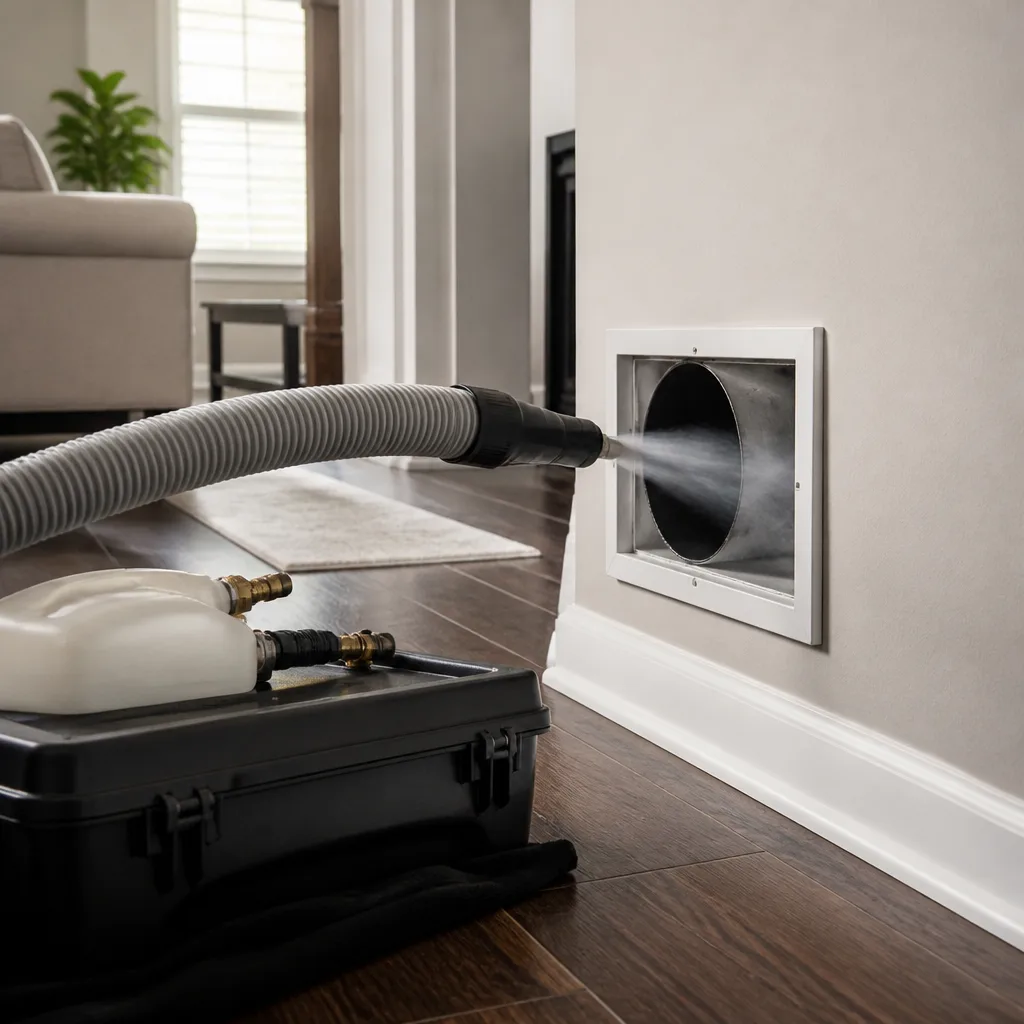 Sanitizing & deodorizing
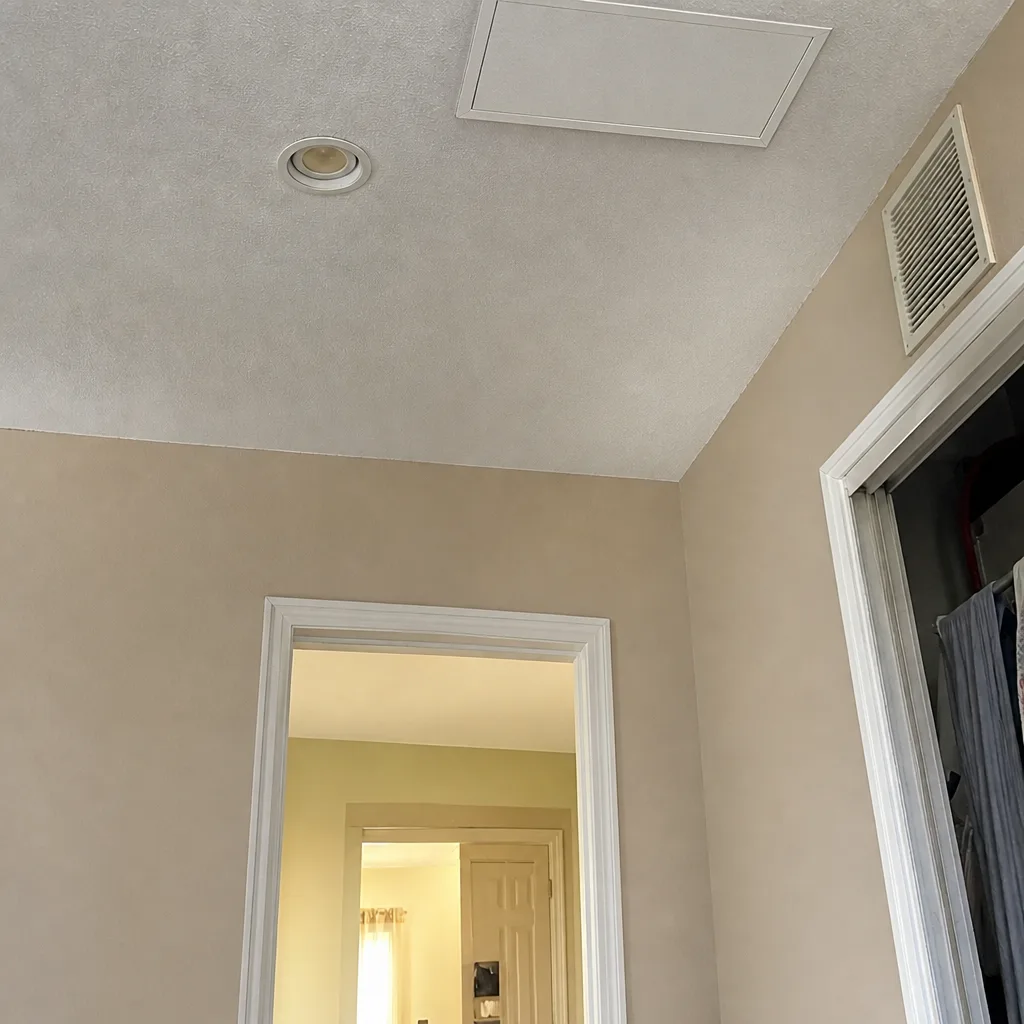
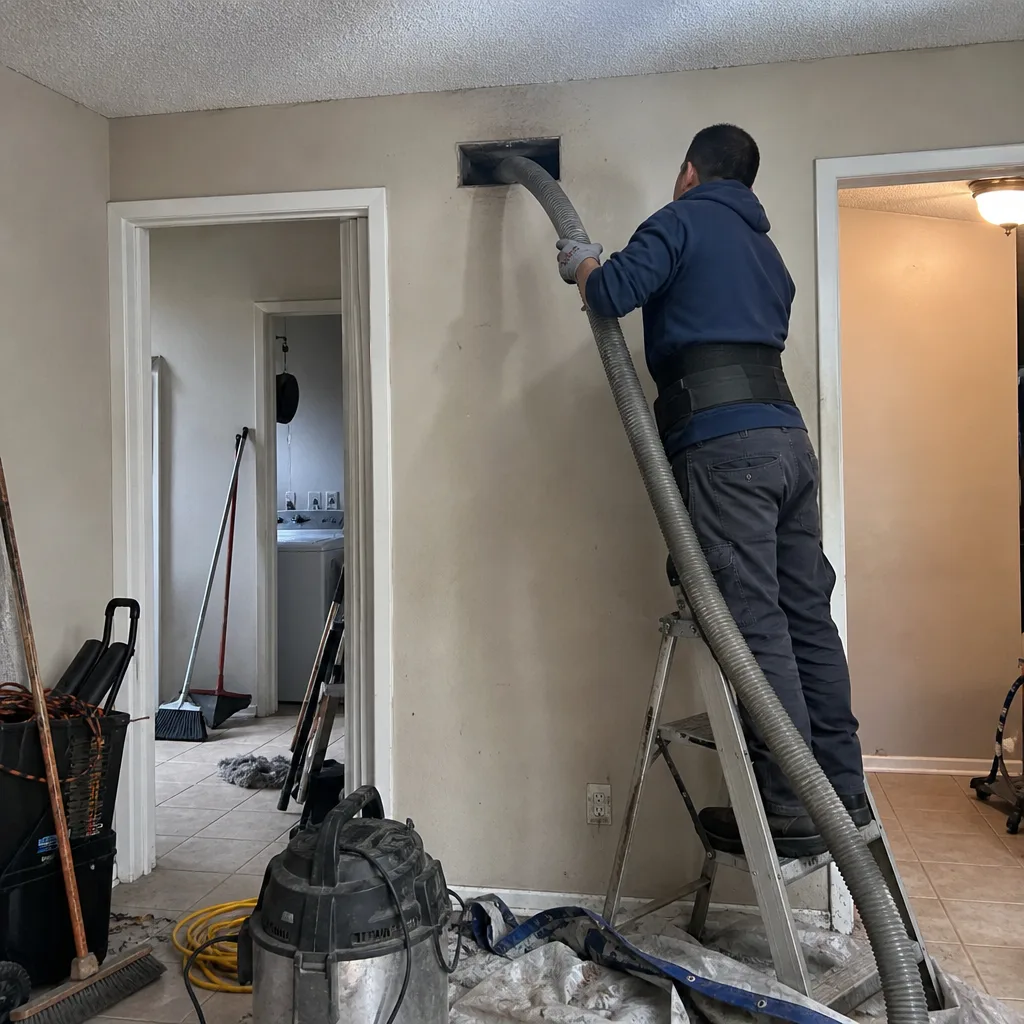
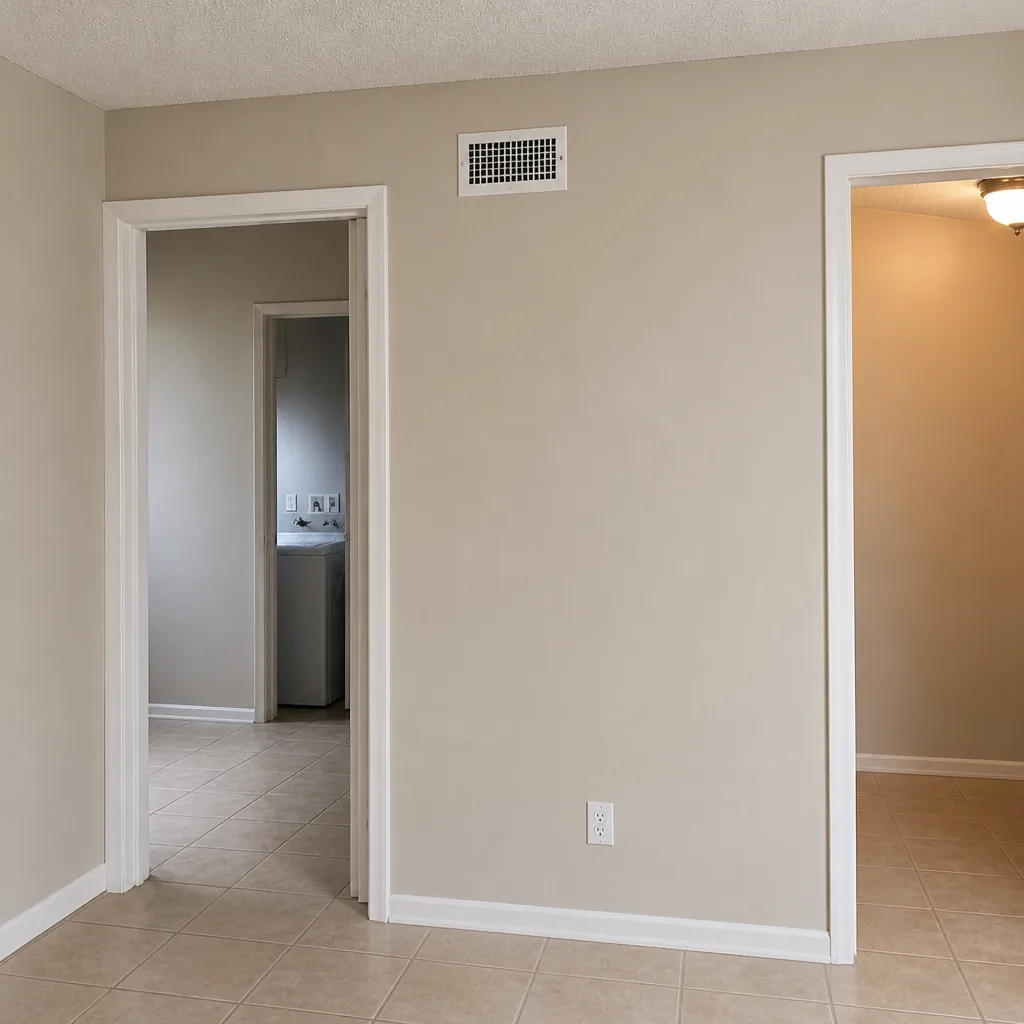
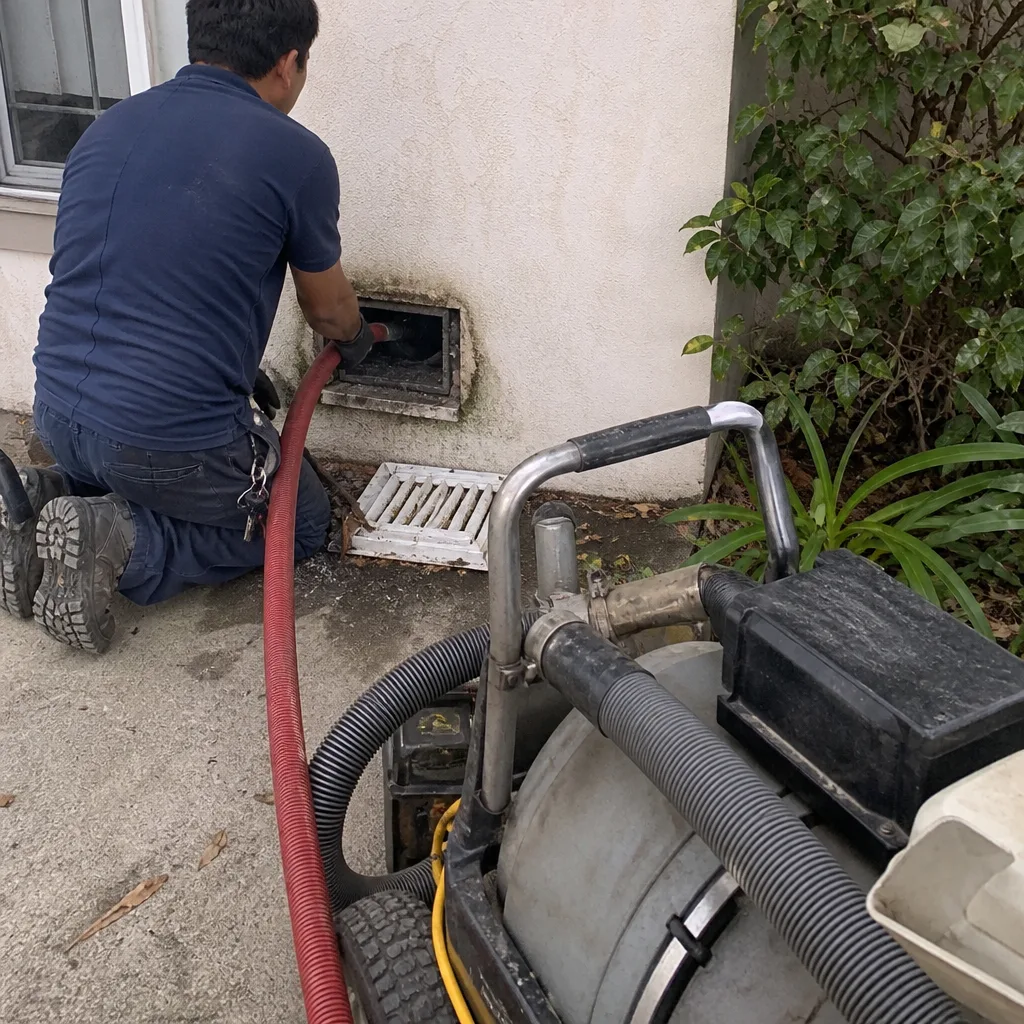
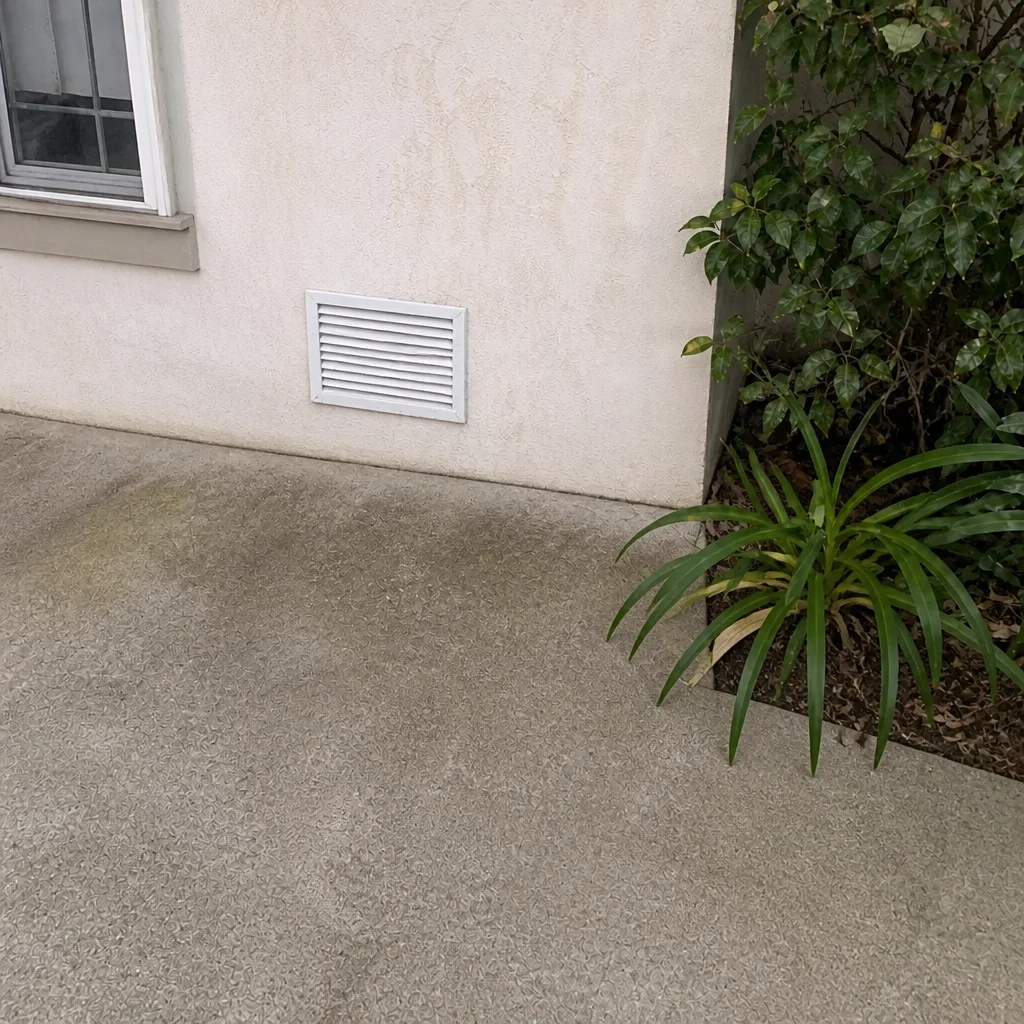
Whole-system duct and dryer vent check with before-and-after photos - you see exactly what came out of your vents
That "$99 whole-house special" is a bait ad - the real number appears once they are in your hallway, or the "clean" is a shop-vac at the register. We photograph the inside of your ducts before and after instead.
Air Duct Cleaning Permits, Codes & Inspections in Westminster, CA: What You Need to Know
Here’s the part of air duct cleaning that surprises almost everyone: the cleaning itself is maintenance, and maintenance doesn’t need a permit. The moment a technician cuts into a duct, reconnects a trunk line, or swaps out a run of flex, you’ve crossed into alteration territory, and Westminster’s rules change. This distinction trips up homeowners every week, because it’s rarely explained up front. A cheap cleaning quote can quietly turn into unpermitted construction. In this guide, we’ll walk through California Mechanical Code, what actually triggers a permit in Westminster, when Title 24 steps in, how inspections work, and the questions to ask before anyone touches your ductwork.
Quick Answer
Air duct cleaning in Westminster, CA is routine maintenance and generally does not require a permit, but duct repair, replacement, or any modification to the system usually does. Under the California Mechanical Code, work that alters a duct system counts differently from work that cleans it, and sealing or resizing can bring Title 24 energy compliance into play. The permit is pulled through the City of Westminster Building Division, typically by the contractor doing the work. If a company tries to talk you out of a permit for genuine repair work, that’s your signal to look elsewhere.
Styles & brands we work with
- Whole-home duct cleaning
- Dryer vent cleaning
- Camera inspection
- Sanitizing & deodorizing
Table of Contents
- Cleaning Is Maintenance, Repair Is Alteration: The Core Distinction
- What the California Mechanical Code Says About Your Ducts
- When Duct Sealing Triggers Title 24 Compliance Review
- How the Westminster Permit Process Actually Works
- What Inspections Are Required, and When
- What Happens When Unpermitted Duct Work Surfaces
- Questions to Ask Before You Hire Anyone
- How Cleaning and Repair Fit Together in One Visit
Cleaning Is Maintenance, Repair Is Alteration: The Core Distinction
Think of it the way a mechanic thinks about your car. Changing the oil (maintenance) is fine on its own. Replacing the exhaust manifold (alteration) is a different category of work, and it’s regulated differently. Your ductwork behaves the same way under California rules.
Cleaning means removing dust, debris, and buildup from inside a duct system that’s already in place and functional. It’s maintenance. No permit needed, no inspection required. The technician runs extraction and agitation equipment, clears the supply and return runs, cleans the HVAC cabinet and coil area, finishes at the vent grilles, and leaves the structure of the system exactly as it was.
Alteration means the structure of the system is changing. That’s where permits enter the picture, and it’s a much broader list of activities than most homeowners expect.
Under the California Mechanical Code, alteration generally covers work that includes:
- Duct replacement – pulling out a section of deteriorated or crushed flex duct and installing new duct in its place.
- Resizing ducts – changing a run’s diameter or length, which affects airflow balance across the system.
- Rerouting or extending runs – adding a branch off a trunk line or moving a run to serve a new room, often part of a remodel.
- Reconnecting or resealing a disconnected joint or trunk – when ductwork has separated and needs to be physically joined and sealed, this crosses from maintenance into repair.
- Adding components – installing dampers, a new filter housing, an inline humidifier tied to the ductwork, or a filtration upgrade that requires duct modifications.
Notice what’s not on this list: brushing, vacuuming, sanitizing, and cleaning the air handler. Those are maintenance and stay outside permit territory. In our experience, the confusion comes because a single service visit often involves both cleaning and repair, and the permit question only applies to the repair half. If your Westminster home needs resealing or a duct section replaced alongside the cleaning, that’s a normal combination, and the repair portion should be handled like the regulated work it is. For straightforward air duct cleaning with no structural changes, we schedule the work and get it done without the permit step.
What the California Mechanical Code Says About Your Ducts
California doesn’t regulate duct cleaning through a dedicated statute. What it does regulate is the installation, alteration, and repair of mechanical systems, and that’s where ductwork lives under the California Mechanical Code. The code exists to make sure your system is safe, properly vented, and doesn’t leak air or contaminants where it shouldn’t. A duct system that’s been altered without review isn’t just a paperwork problem – it’s an engineering problem that affects pressure balance and the quality of air moving through your home.
For Westminster homeowners, the practical takeaways come down to a few clear principles:
- Cleaning sits outside the code’s alteration provisions. There’s no code section requiring a permit to vacuum out a duct system. Maintenance cleaning is not mechanical alteration.
- Any change to the system’s configuration needs review. Replacing flex duct, adding a run, or connecting a new component counts as alteration and falls under permit requirements.
- The code cares about air leakage in ways a homeowner rarely hears. Duct systems that leak can draw air from garages, crawlspaces, or attics, pulling contaminants into the living space. Sealed, properly installed ductwork is the code’s objective.
- Local amendments can exceed the state code. Cities in California can adopt their own amendments to the mechanical code, which is why the City of Westminster Building Division is the final word on what your specific project requires.
We always advise a homeowner to confirm with the Building Division before a repair project begins, and to make sure the contractor is doing that confirmation. Our technicians have up to 11 years of experience and have worked on systems in older Westminster properties that were installed decades ago and modified several times since. Those systems routinely have ductwork that doesn’t match what’s on the last permit record, because somewhere along the way a repair happened without a permit being pulled. That’s how the problem compounds.
Worth noting: the code is also the reason HVAC cleaning is treated carefully. Cleaning the unit is maintenance, but if the job uncovers a cracked heat exchanger or a loose duct trunk, the repair has to be handled as a separate, regulated piece of work. Cleaning tells you what’s wrong. Repair puts it right, and that’s where the permit conversation starts.
When Duct Sealing Triggers Title 24 Compliance Review
Title 24 is California’s set of energy efficiency standards, and it’s the layer most homeowners have never heard of when they’re thinking about duct cleaning. Title 24 addresses how energy-efficient a building’s systems must be, and duct systems are covered because duct leakage is one of the biggest sources of wasted conditioned air in any home.
When does sealing a duct trigger Title 24 review? It depends on the scope of the work, but the situations we’d flag in Westminster are:
- Duct sealing as part of an HVAC system alteration. When a permitted mechanical change reaches into the ductwork, the work needs to meet Title 24 duct sealing and insulation standards. The permit and the compliance review travel together.
- Duct sealing during a renovation or major remodeling project. Any residential project that touches the mechanical system and requires a permit brings Title 24 into the picture. Duct sealing bundled with a remodel falls into this category.
- Replacement of ducts serving conditioned space. In many cases when ducts are replaced rather than merely cleaned, Title 24 duct sealing requirements apply to the new installation.
Here’s where older Westminster homes get interesting. Westminster has a lot of housing stock built in the mid-twentieth century, and HVAC systems in many of those homes have been modified multiple times. Original ductwork was often sized differently than current codes would require, and whatever modifications happened along the way left gaps. When a homeowner has a duct system reviewed or repaired, the compliance standard applies to the work going forward. That’s not a problem – it actually tends to improve the home – but it’s the reason a duct sealing job can be more involved than a homeowner expects. A passive cleaning visit and a compliant sealing project are different scopes of work. Understanding that going in prevents a surprise at the end of the job.
Title 24 compliance review is handled when the permit is pulled, and it’s the contractor’s job to make sure the project meets the applicable standard. If a contractor tells you that sealing “doesn’t need a permit” for a repair that involves meaningful modification, ask them to explain why in writing. The answer will tell you whether they understand the compliance landscape or whether they’re working around it.
How the Westminster Permit Process Actually Works
Westminster’s permitting runs through the City of Westminster Building Division, which is part of the city’s Planning and Building Department. The Building Division is the entity that issues mechanical permits, reviews plans when review is required, and schedules the inspections that verify the work was done correctly. If your duct repair or modification requires a permit, this is where it happens.
The general sequence for a duct-related permit in Westminster runs like this:
- The contractor pulls the permit. The permit is the responsibility of the contractor doing the work, and in most cases the contractor does pull it. Homeowners can pull permit work themselves as an owner-builder in many cases, but doing so means the homeowner becomes accountable for inspection and code compliance with very little recourse if the work fails. We strongly recommend having the licensed contractor handle the permit so the liability stays where the work is.
- The permit is issued and work proceeds. District-level permitting like mechanical work typically moves faster than full building permits for new construction, but the timing depends on the scope of the work and whether the plans need review.
- Inspection is scheduled at key points. For mechanical alteration work, the Building Division will inspect at the stages it specifies for your project. This is the point where the work is verified against the code.
- The permit is finalized. Once inspection passes, the permit is signed off and closed, which creates the public record that proves the work was done correctly.
One detail that matters: the inspection record is the proof that travels with the house. When you sell a Westminster property, a buyer’s inspector can pull permit history for the address. Closed mechanical permits show the work was reviewed. Opened and never closed permits – or work with no permit record at all – raise questions about what was done and how. The permit is the documentation trail.
The exact fee and timeline for a specific project are determined by the Building Division based on the scope, and estimates are free for our services. Call (855) 550-7935 and we’ll walk through whether the work you need crosses into permit territory before anyone touches your ducts.
What Inspections Are Required, and When
Inspection requirements track the scope of the permit. A routine cleaning has no inspection because there’s no permit. A duct repair that crosses into alteration gets inspected at the point or points the Building Division specifies for that type of work. The inspection isn’t a formality – the code official is verifying that the ductwork is properly installed, properly sealed, and routed in a way that doesn’t create a safety or air quality problem.
For a typical residential mechanical permit involving ductwork, inspections commonly cover:
- The mechanical installation before it’s closed up. If the work involves duct runs above a ceiling or behind finished surfaces, the inspection happens before those surfaces are restored so the work is visible.
- Duct sealing and joint integrity. The inspector confirms the duct system is sealed at joints and connections as the code and Title 24 require.
- Clearances and venting. Mechanical work has to meet clearance requirements from combustible materials and proper venting for the system’s exhaust side.
- Final inspection. When all the pass-through checks are complete, the permit gets a final inspection, which is the point where it’s closed out.
What should you, the homeowner, do during the inspection process? A few things make the whole thing smoother:
- Confirm the contractor has scheduled the inspection and knows the inspection stage required for your work.
- Be available for the inspector’s visit if the Building Division requires the homeowner to grant access, which is common.
- Keep the inspected permit posted or accessible if the city requires it, and keep the paperwork after closeout.
- Verify at the end that the permit shows as closed, and get documentation from the contractor confirming it.
The whole point of inspections is that you end up with a record – not a handshake. If you later sell the home, refinance, or file an insurance claim, that record is what protects you.
What Happens When Unpermitted Duct Work Surfaces
Here’s the scenario we see most often, and it’s the one that makes the permit conversation worth having up front. A homeowner buys a Westminster house. The inspection report from the buyer’s side notes “ductwork modifications observed, no permit record found.” That single line in the report can hold up a transaction, force a retroactive permit, or become a bargaining chip in the price negotiation. The buyer’s lender may require the work to be brought into compliance before closing, and the seller is suddenly on a clock, paying for a permit and inspection on work that was done years ago.
A few outcomes worth understanding:
- Retroactive permits. Westminster, like most California cities, has a process for permitting work that was already done. It requires opening a permit, exposing the work where the inspector needs to see it, and passing inspection. If the ductwork has been concealed behind drywall or above a finished ceiling, exposing it can be a meaningful expense on top of the permit itself.
- The disclosure requirement. California property sellers have disclosure obligations about material facts affecting the property. Unpermitted work can be a material fact. Buyers who end up with a problem can pursue remedies that put the seller in a much worse position than the permit would have cost.
- Insurance complications. If a claim arises from a duct-related issue – a leak, a system failure, air quality damage – the insurer will want to know whether the work was permitted and inspected. Unpermitted work can affect how the claim is handled, and depending on the policy, it can complicate coverage.
- Compounding code compliance. When a subsequent contractor works on an unpermitted system, they inherit whatever was done. Bringing the whole thing into compliance can be a bigger job than if the original work had been permitted.
The unglamorous truth is that a permit is inexpensive relative to the risk it prevents. A duct repair that gets permitted and inspected creates a clean paper trail. A duct repair that doesn’t creates a question mark that carries forward into every transaction, claim, and future contractor’s scope of work.
Questions to Ask Before You Hire Anyone
The quality of a duct contractor is often visible in how they answer permit questions. A company that understands the regulations answers with specifics – which code applies, whether the work is maintenance or alteration, what the Building Division will want to inspect. A company that wants to avoid permits answers with shortcuts. Here’s what to ask, and what a good answer sounds like.
- “Is the work you’re proposing maintenance or alteration?” A good answer separates the cleaning (maintenance, no permit) from any repair or modification (alteration, likely permit). A poor answer conflates the two, or says the work “doesn’t need a permit” without asking what the work actually involves.
- “Who pulls the permit if one is needed?” A good answer is the contractor, with their license on the record. A poor answer is “the homeowner can handle it” when the contractor is doing the work.
- “What inspections will apply?” A good answer names the inspection stages for your specific job. A poor answer is a blank look or “we’ve never needed an inspection.”
- “Will the work need to meet Title 24 duct sealing standards?” A good answer recognizes when Title 24 applies and explains how the work meets it. A poor answer is a dismissal of the question.
- “Can you provide the permit number once it’s issued?” A good answer is yes, and the number shows up on your documentation. A poor answer is a promise to handle it without any record.
- “What’s your license number?” A good answer provides it immediately. The local pro you work with through us is licensed and insured as their state requires, and the license number should be available before anyone steps into your home.
One word of caution: don’t confuse “we don’t need a permit” (which is sometimes a correct and accurate answer for cleaning) with “we won’t get a permit” (which is a red flag when the work actually requires one). The right contractor will tell you the difference clearly, and won’t hand-wave the details. For a straight-forward dryer vent cleaning visit, no permit is involved at all, and no contractor should be inventing reasons why it might be. It’s the duct repair and system alteration work that deserves the most scrutiny. That’s the work that carries forward into your home’s paperwork for as long as you own it.
How Cleaning and Repair Fit Together in One Visit
The most useful thing you can do is have the whole air pathway evaluated in one visit – cleaning, HVAC system, duct condition, and dryer vent – so that the permit question is answered before any work begins. Most homeowners calling for duct cleaning don’t know whether their ducts are intact, sealed, and properly routed. The evaluation tells them, and the permit decision follows from the evaluation.
What our evaluation looks like when we’re in a Westminster home:
- Cleaning. Supply and return ducts are cleaned using Rotobrush rotary brush systems and Nikro equipment, and the HVAC cabinet and coil area are addressed as part of the same service.
- Condition assessment. We look for disconnected joints, crushed or deteriorated duct sections, and evidence that an earlier modification isn’t quite right.
- Sealing and repair, when warranted. If ductwork is leaking or disconnected, we address the root cause rather than cleaning around it. That’s the point where the permit question gets answered.
- Air quality components. Honeywell and Aprilaire products are available when a home needs filtration or humidity control beyond the cleaning itself, and Abatement Technologies equipment is used for higher-contamination or post-construction scenarios.
- Dryer vent. Dryer vent cleaning is done in the same visit because it’s the other side of your home’s exhaust picture.
We carry the full scope – cleaning, repair, sealing, and sanitizing – because a home with a leaking duct is a home that gets half its problem solved by cleaning alone. If the system needs a permit for the repair portion, we treat that as normal and not as a hassle. Getting the paperwork right once means you’re not dealing with it again years later. If you’re considering what your home actually needs, the most efficient path is a free estimate that includes both an assessment and an honest read on whether the work crosses into permit territory.
Common Mistakes to Avoid
- Assuming “no permit needed for cleaning” applies to the whole job. Cleaning has no permit requirement, but repair and alteration do. Ask the contractor to separate the two in their written scope.
- Letting the contractor tell you “we’ll handle it” without naming the permit. If work requires a permit, the contractor should be able to tell you what permit they’re pulling and when. A vague “we’ll take care of the paperwork” isn’t a permit.
- Skipping the Title 24 question during a meaningful duct repair. Title 24 duct sealing standards apply when the work crosses the threshold. Asking the question before the work starts avoids surprises after inspection.
- Pulling the permit yourself as an owner-builder for someone else’s work. The homeowner can be legally permitted to pull a permit in some circumstances, but doing so for a contractor’s job puts you on the record as the responsible party. Let the contractor pull their own permit.
- Not verifying the permit closed. An open permit on record will show up when you sell the home. Confirm the permit number and that the Building Division marked it final.
- Trusting a “no permit” claim without understanding the scope of work. Cleaning, sealing, and modification are three different categories. Ask about the category, not the company’s word.
- Cleaning a duct system that has a disconnected trunk or a deteriorated flex section. Cleaning without addressing the leak cleans the surfaces but leaves the underlying problem. Fix the leak, then clean.
See the difference
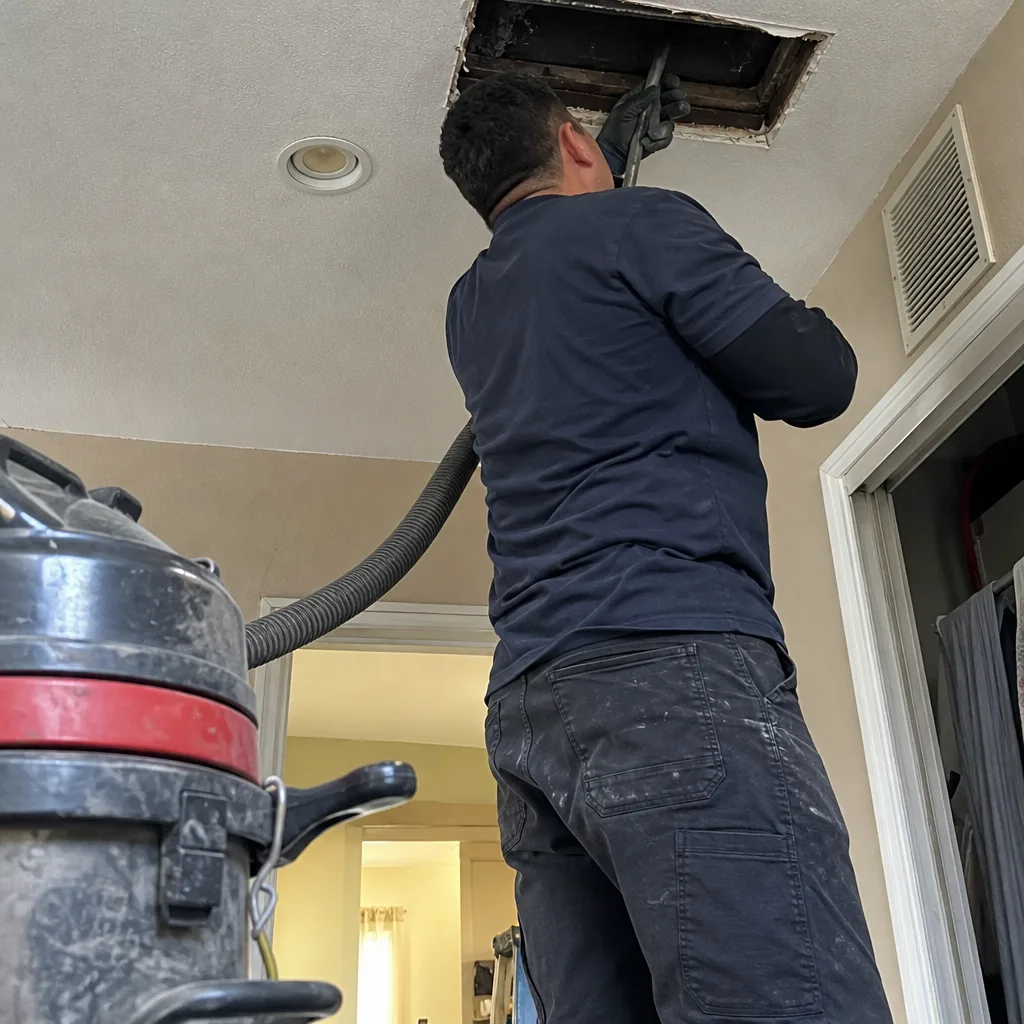 Before
 After
 Before
 After
 Before
 After
When to Call a Professional
Some jobs are cleaning. Some are repair. Some are both, and knowing which one applies to your Westminster home is the whole point of a professional assessment. Call a professional if you notice: visible dust, mold, or debris around your vent grilles; airflow that varies widely from room to room; whistling or rattling noises from the ductwork; a musty smell that appears when the HVAC runs; a home that fills with dust faster than it should; or ductwork that was modified during a renovation and never documented. These can be cleaning problems or repair problems, and the difference matters. Westminster Air Duct Cleaning Co offers free estimates in Westminster – call (855) 550-7935. We answer 24/7. Fast dispatch from 7am to 7pm, Sunday through Friday. We’ll tell you what the work needs and whether it crosses into permit territory, and we won’t guess at the answer.
For the full scope of everything we do – Westminster Air Duct Cleaning Co covers the air pathway from the HVAC cabinet to the vent grille – a single assessment gives you the whole picture in one appointment.
Frequently Asked Questions
No. Air duct cleaning in Westminster is routine maintenance and does not require a permit. You only cross into permit territory when the work involves altering, replacing, or repairing the duct system itself. If a contractor tells you a cleaning needs a permit, ask them what specific work they’re describing – the answer should tell you whether they understand the distinction. Call (855) 550-7935 for an exact quote on cleaning work – estimates are free.
It depends on the scope. Sealing a minor joint as part of routine maintenance generally doesn’t require a permit, but sealing that accompanies a system alteration, duct replacement, or a larger renovation usually does. When the work crosses that threshold, Title 24 duct sealing standards apply. The safe move is to ask the contractor to identify the scope of the sealing work and confirm whether the Building Division would consider it maintenance or alteration. Call (855) 550-7935 to talk through the work your home needs.
The contractor doing the work should pull the permit. In most cases this is the correct arrangement because it keeps the licensed party accountable for the code compliance and inspection. A homeowner can be permitted to pull some permits as an owner-builder, but doing so for a contractor’s job makes the homeowner the responsible party on record. Call (855) 550-7935 and we’ll explain how the process works for your specific repair.
The unpermitted work shows up during the buyer’s inspection, usually as a missing permit record. That can trigger a retroactive permitting process, an inspection that requires exposing the work if it’s been covered over, and a negotiating position against the seller. California’s disclosure rules mean unpermitted work can be a material fact. In short, the missing permit can become the most expensive part of the transaction. Call (855) 550-7935 if you’re unsure whether existing ductwork was permitted.
Inspection requirements track the permit scope, and the City of Westminster Building Division specifies the exact stages. For typical mechanical alteration work, inspections commonly cover the installation before it’s closed up, duct sealing and joint integrity, clearances and venting, and a final inspection to close the permit. The Building Division confirms the stages for your project, and the contractor is responsible for scheduling them. Call (855) 550-7935 and we’ll walk through the inspection picture for the work you’re considering.
Usually because they’re a different scope of work. A low quote may cover a partial cleaning of one vent stack rather than the full air pathway, may skip the HVAC cabinet and coil area entirely, or may not include any repair or sealing. When a technician arrives and finds disconnected ductwork or deteriorated flex, the price jumps. That’s the bait-and-switch pattern this industry is known for. Our approach is one flat price per system agreed before work starts, no per-vent pricing, and before-and-after photos of your own ducts so you can see exactly what changed. Call (855) 550-7935 for a free estimate.
There’s no single answer because it depends on the home: pets, recent renovations, allergy or asthma concerns, and whether the ducts are sealed all shift the timeline. For many homes, a full assessment makes more sense than guessing at a schedule. If ductwork is intact and sealed, cleaning intervals can be longer. If ducts are leaking or the home is older, the condition of the system is the starting question. Call (855) 550-7935 and we’ll help you work out a sensible interval for your Westminster home.
Title 24 applies to the work going forward, not to the original construction. When permitted mechanical work touches the duct system in an older Westminster home, the work involving those ducts generally has to meet current Title 24 standards even if the rest of the home was built to earlier codes. That’s why a duct repair can be more involved than expected in a mid-century house. Call (855) 550-7935 and we’ll explain how the standard applies to the work you’re considering.
The Bottom Line
Cleaning and alteration are two different categories under California rules, and treating them as the same thing is where homeowners get into trouble. Cleaning your ducts is maintenance. Repairing or replacing them is alteration, and that’s where the California Mechanical Code, Title 24, the City of Westminster Building Division, and permit inspections all come into play. The most reliable approach is a full assessment before any work begins, so you know which category the job falls into. Get the permit when it’s needed, keep the paperwork, and verify it closes. If you’re unsure, ask. A contractor who understands the regulations will answer without hesitation. A contractor who won’t is a contractor you should pass on. For ductwork in Westminster – cleaning, repair, sealing, or the full air pathway – call (855) 550-7935 for a free estimate. We answer 24/7. Fast dispatch from 7am to 7pm, Sunday through Friday. Closed Saturday.
Written by the team at Westminster Air Duct Cleaning Co.