
Last updated November 25, 2026
 Whole-home duct cleaning
 Dryer vent cleaning
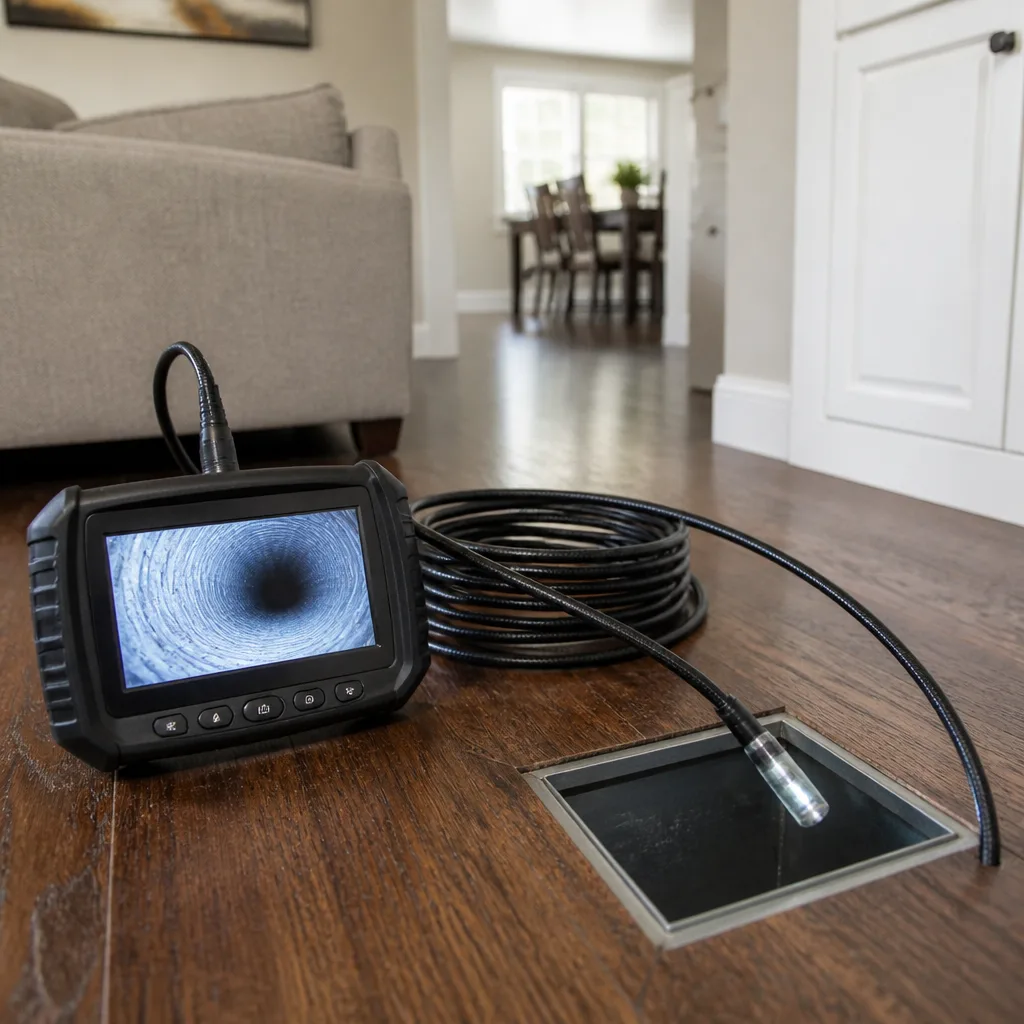 Camera inspection
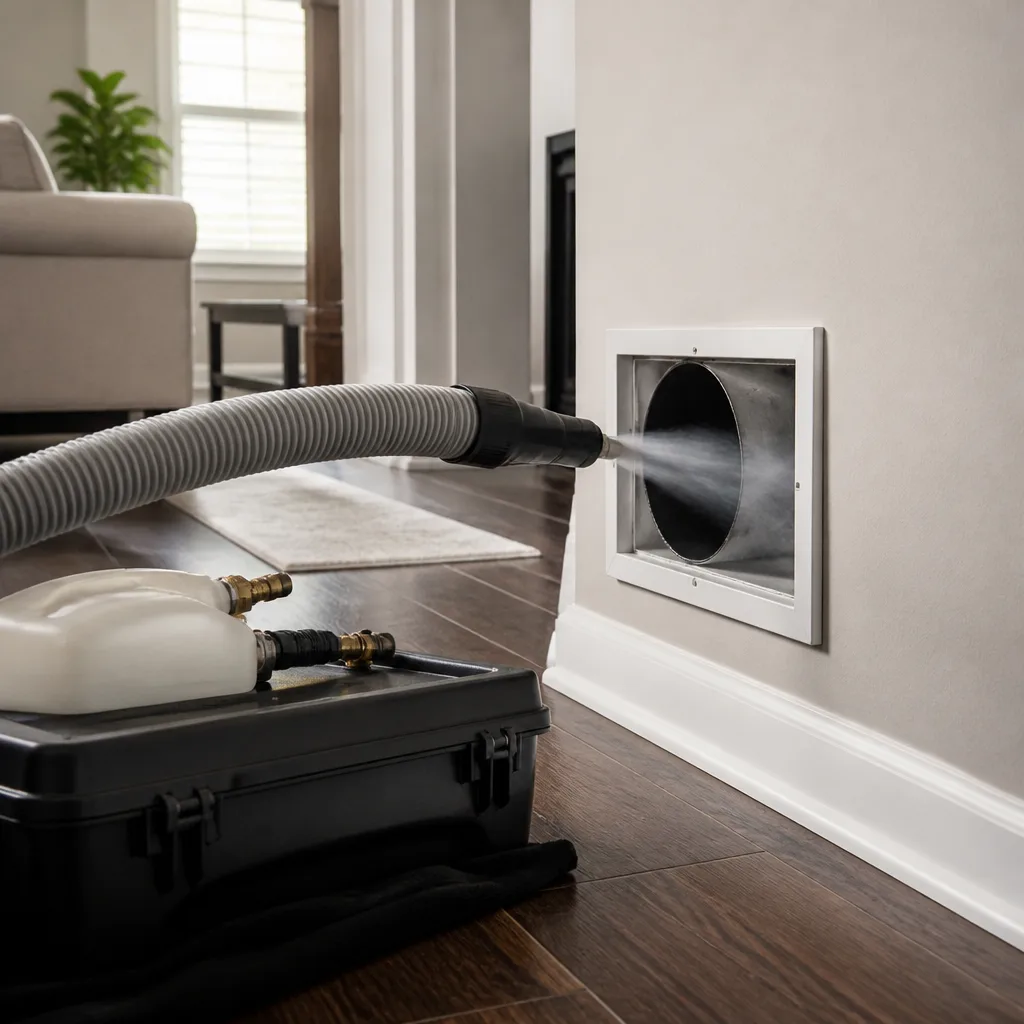 Sanitizing & deodorizing
Whole-system duct and dryer vent check with before-and-after photos - you see exactly what came out of your vents
That "$99 whole-house special" is a bait ad - the real number appears once they are in your hallway, or the "clean" is a shop-vac at the register. We photograph the inside of your ducts before and after instead.
Air Duct Cleaning Cost Breakdown: The Westminster Homeowner’s Reference for 2026
A quote of $299 and a quote of $899 for “duct cleaning” in Westminster can both be accurate, or both be wrong, and the number itself tells you almost nothing. The price only means something when you know what’s being priced: how many registers, how the system is configured, how hard the ducts are to reach, whether the HVAC cabinet and coil are included, and whether sealing is part of the job. Most homeowners compare totals when they should be comparing scopes. This guide is written to fix that. We’ll walk through every legitimate cost variable in a Westminster home, show you what a detailed quote should itemize versus what should stay bundled, explain why the older housing stock here often costs more to service honestly, and give you the exact language to hold a contractor to a written price. By the end, you’ll be able to read any quote and know whether it’s fair.
Quick Answer
Air duct cleaning cost in Westminster depends on four things: the size of the system (square footage and register count), the configuration (single-zone versus multi-zone), access difficulty (attic-run versus slab-level ducts), and scope (cleaning only versus full-system service including the handler cabinet, coil inspection, and duct sealing). A fair quote itemizes these variables before it states a price. If a quote leads with a low base number and adds charges per vent once the technician is on site, that’s a pricing pattern, not a quote. Call (855) 550-7935 for a free estimate and a written scope before any work starts.
Styles & brands we work with
- Whole-home duct cleaning
- Dryer vent cleaning
- Camera inspection
- Sanitizing & deodorizing
Table of Contents
- What actually drives air duct cleaning cost in Westminster
- System size: square footage and register count
- System configuration: single-zone versus multi-zone
- Access complexity: attic-run versus slab-level ducts
- Duct material: rigid sheet metal versus flex
- What a detailed quote should itemize, and what it shouldn’t
- Cleaning only versus full-system service
- Why older Westminster homes cost more to service correctly
- Using a written scope of work to hold a price
What actually drives air duct cleaning cost in Westminster
The price of duct cleaning isn’t a single commodity rate. It’s a total built from measurable variables, and each one moves the number by a predictable amount. When a contractor understands those variables, the quote explains itself. When a contractor is guessing, the quote is a round number with no reasoning behind it, and the reasoning gets invented later as add-on charges.
Here are the variables we weigh on every Westminster job:
- Square footage and register count. More rooms and more supply/return registers mean more branch runs, more travel, and more extraction time. This is the baseline both contractors should agree on first.
- Configuration. A single-zone system is one trunk with branches feeding every room. A multi-zone system has dampers, separate trunks, or zoned HVAC, and each zone is serviced as its own pathway.
- Access. Ducts that run through an attic space are reached from attic access panels. Ducts that run under a slab are reached only where registers penetrate the floor, and sometimes not at all without special tooling.
- Material. Rigid sheet metal ductwork tolerates rotary brush agitation. Flex duct needs gentler handling to avoid damaging the liner or pulling the coil out of shape.
- Scope of work. Cleaning only is one job. Cleaning plus handler cabinet plus coil inspection plus duct sealing is another, larger job with a different outcome.
- Condition. A recently renovated home with construction debris in the returns is not the same job as a maintained system with ordinary dust loading.
Those six variables establish the price. Everything else – the coupon, the “today only” offer, the “we can save you money” opener – is sales pressure layered over a number that should have been determined by the variables on the list above.
System size: square footage and register count
Square footage and register count are the starting point for any honest estimate. They set the baseline labor and equipment time, and every other variable adjusts from there. A compact Westminster home with six or seven registers is a fraction of the work of a two-story home with fifteen.
How register count affects a job:
- Travel time. Each supply and return register requires the technician to set up the extraction hose at that opening, agitate the branch feeding it, and confirm airflow afterward. Nine registers take roughly twice the setup as four or five.
- Hose routing. Rotobrush and Nikro equipment are contractor-class tools, not shop-vacs, and they need to be moved from outlet to outlet. That routing is part of the labor.
- Verification. Every register is checked on both ends of the job – before-and-after photos are taken of the same openings so the homeowner can see the difference.
If a quote doesn’t ask for square footage or register count, or doesn’t walk the home before pricing, the number on the page belongs to someone else’s house. There’s no way to be confident it matches yours. A Westminster homeowner who calls ahead of time can give us square footage, register count, and the approximate age of the HVAC unit, and those three facts let us start the estimate conversation already pointed at the right scope. That’s the reason we ask for them at the same time we ask for your address.
System configuration: single-zone versus multi-zone
Single-zone and multi-zone systems cost different amounts to clean, and the gap is legitimate. A single-zone system is one thermostat, one furnace or air handler, one trunk line, and branches to every register. A multi-zone system has two or more trunks, often with motorized dampers or separate air handlers serving different areas of the home, and each zone is a separate pathway that has to be cleaned on its own.
What changes for multi-zone systems:
- The trunk count doubles or triples. Each trunk is cleaned from the air handler outward, which adds agitation and extraction time.
- Dampers get inspected. Dampers collect dust on both faces, and if they aren’t functioning, downstream cleaning doesn’t hold.
- The handler cabinet work grows. Multiple air handlers mean multiple cabinets, multiple coils, and multiple filter racks to check and clean.
- Equipment setup repeats. The extraction negative-pressure setup is re-established at each handler.
A house with two HVAC systems and fourteen registers is a bigger job than a single system with the same fourteen registers. Any quote that doesn’t ask which of these your home has is pricing a category of work, not your home. If your Westminster home has zoned cooling with separate upstairs and downstairs thermostats, tell the estimator that up front – it changes the price for a real reason, and we’d rather explain it before you book than surprise you after a truck shows up. Call (855) 550-7935 with your configuration and the team will walk through what’s typically involved. Our technicians have up to 11 years of experience reading these differences on the walkthrough.
Access complexity: attic-run versus slab-level ducts
Access is the single most under-priced variable in duct cleaning quotes, and it’s where most bait-and-switch pricing originates. Ducts in an accessible attic or a traditional crawlspace are reachable, and the technician can agitate and extract through standard openings. Ducts running under a concrete slab have no attic route and no crawlspace route – the only access points are the registers themselves, which limits what can be done and changes the technique.
Access categories, from easiest to most complex:
- Attic-run ducts with a walkable or half-crawlable attic. Reached through an existing attic access panel. Straightforward.
- Attic-run ducts with a tight or low-clearance attic. Reached, but slowly. More time, more careful hose routing, more labor.
- Crawlspace ducts. Reached from a crawlspace access, with the same time-and-care variables as attic work.
- Slab-level ducts. Reached only through floor registers. The technician cannot run a hose through the trunk itself in most cases, and the work focuses on the register-to-branch section rather than the trunk and branch run.
- Mixed systems. Some Westminster homes have a mix – attic-run main trunk and slab-level branch runs, or the reverse. That’s the most complex category and takes the longest.
A quote that treats all Westminster homes as one access category is going to be wrong on the low side for a mixed or slab system, which means the “extra charges” show up once the technician is inside. Ask before the visit which category your home falls into. If a contractor can’t tell you without a walkthrough, the walkthrough should be free. It is with us.
Duct material: rigid sheet metal versus flex
Rigid sheet metal ductwork is built to move air, and it’s built to be cleaned. It can handle rotary brush agitation, it holds its shape under negative pressure, and it doesn’t degrade when a contractor-class tool reaches into the branch. Flex duct is a plastic sleeve stretched over a wire coil with an insulating jacket, and it’s a different job.
What changes with flex:
- Gentler agitation. The rotary brush is controlled more slowly to avoid tearing the liner or pulling the coil out of shape. That control takes time.
- Liner inspection. Flex that’s been run through a hot attic for a long time can have liner damage already. The technician checks it during the job and reports it.
- Sharp bends and sags. Flex that’s kinked, sagged, or routed around tight attic obstructions is harder to clean fully, and the technician may need to add access cuts and re-seal them.
- Transition points. Wherever flex connects to rigid – at a boot, plenum, or trunk takeoff – the joint is a dust collection point and gets checked.
Most Westminster homes are a mix: rigid sheet metal in the trunk and plenum, flex in the branch runs to the registers. When we quote, we price the two materials separately, because the labor behind them is genuinely different. That detail appearing on your quote is a sign the contractor knows the home, not a sign they’re up-charging.
What a detailed quote should itemize, and what it shouldn’t
A detailed quote puts the variables on the page before it states a price. When the quote reads like a short menu of related but separable work, you can audit it. When the quote reads like a single circle with a number inside, you can’t, and you’re relying entirely on the contractor’s honesty. Both kinds exist in Westminster. One is standard practice; the other is a recognized pricing pattern.
What should appear as separate line items:
- Supply and return duct cleaning. Both sides of the system, priced as scope of work with the register count stated.
- HVAC cabinet and blower compartment cleaning. The air handler or furnace cabinet where the ducts terminate – this is a distinct task and should not be buried inside a “duct cleaning” line.
- Coil inspection. An inspection, not automatically a cleaning. If the coil needs cleaning, that should be a separate, well-explained recommendation, not a surprise charge.
- Duct repair and sealing. Any joint, boot, or takeoff that needs mastic seal, foil tape, or a fitting replaced. Sealing is where a lot of duct cleaning value lives, and it should be visible in the quote.
- Dryer vent cleaning. A separate safety-critical service, priced separately.
- Air sanitizing if applicable. Guardsman-grade sanitizing treatments, listed as an optional line with the product named.
What should NOT appear as a separate line item after a base price has been stated:
- Per-vent charges added after arrival.
- “Additional filter” charges that weren’t quoted.
- “Urgency” or “same-day” charges.
- Charges for products not named in the quote.
Per-vent add-ons after a base quote are a pricing manipulation pattern because they shift the final price from the estimator to the technician, who works under the same schedule pressure the estimator doesn’t. The fix is simple: one flat price per system, agreed before work starts, in writing. If your system has nine registers or fifteen, the price should already account for it. Call (855) 550-7935 for a written scope and a flat quote.
Cleaning only versus full-system service
Cleaning only is what most people think duct cleaning is: vacuum and agitate the supply and return ducts, snap before-and-after photos, and leave. Cleaning plus full-system service is different work, and the cost difference is real because the time and equipment are.
Full-system service includes:
- Handler cabinet cleaning. The air handler or furnace cabinet where every supply run begins. Dust that collects here recirculates into every room, so cleaning the ducts without cleaning the cabinet is partial work.
- Coil inspection. The evaporator coil is where condensation forms and where biological growth starts. A visual inspection determines whether it needs cleaning.
- Duct sealing. Leaks at boots, takeoffs, and joints let conditioned air escape into attic or crawlspace. Sealing closes them, which is where a lot of the efficiency gain from full-system work actually lives.
- Filter rack verification. The filter rack slot and the filter itself, sized correctly for the system.
- System airflow check. Confirms that airflow is balanced after the work, not just that the ducts are cleaner.
When is full-system service appropriate? When there’s been a renovation or new construction, when there’s visible dust on registers or on the coil, when a system is running more than it should, when a family member has respiratory concerns, or when the home has been recently purchased or moved into and the ducts’ history isn’t known. Cleaning-only is appropriate for a maintained system with an established history and no known concerns.
For a Westminster home that’s just been through a remodel, full-system service with Abatement Technologies filtration equipment deployed on the job is the right call – post-construction debris is a different load than ordinary dust. For a maintained home with an unknown history, full-system service with duct sealing included is usually the more honest starting point. Whichever direction you choose, the quote should show the two paths side by side so you can see what you’re choosing. That comparison is what air duct cleaning quotes should always offer.
Why older Westminster homes cost more to service correctly
Westminster’s housing grew fast during the 1960s through the 1980s construction boom, and the ductwork installed in that era has characteristics that make it genuinely more involved to clean properly than a newer build. This is a real cost variable, not a regional upsell, and it’s worth understanding before comparing quotes.
What we see in this housing:
- Multiple additions and remodels. Many homes have had a room, an added bath, or a converted garage at some point, which means the duct layout reflects two or three different points of construction rather than one. Each addition is another place to inspect and another set of joints to verify.
- Mixed register layouts. Homes from this period often have irregular register spacing. Adding a register in one room and not another leaves branch runs at different pressures, which affects airflow after cleaning and makes the sealing step more important.
- Duct material transitions. Ridge, pleated, and asbestos-era materials sometimes show up at plenum connections or in crawlspaces. We inspect materials before work starts so nobody is agitating something that shouldn’t be disturbed.
- Slab-level runs more common in some tracts. Ducts under the slab were a construction choice in this era, and those are in the access-complexity category covered above.
- Miles of flex replacements. Flex installed during a partial remodel in the 1990s or 2000s often runs alongside original rigid ductwork, so the job mixes materials within the same system.
None of this means every older Westminster home costs more. It means the honest price is a function of what’s actually in the walls and under the floor, and a contractor who prices this housing stock blind is either underestimating or padding. Our technicians have up to 11 years of experience with this exact pattern of older housing – additions, mixed materials, and slab runs – and walkthroughs include a look at each of these before we quote.
Using a written scope of work to hold a price
A written scope of work is the single strongest protection you have against the price moving after the work begins. It defines what will be done, what won’t be, and what the price is if anything else comes up. Get it before any technician starts, and read the language that creates room for add-on charges rather than the language that closes them.
Language that protects you:
- “Flat price for the scope described below, including all registers listed.” The register count is stated, and the price covers all of them.
- “If additional work is recommended, it will be quoted separately, in writing, and requires your approval before it is performed.” This is the sentence that prevents mid-job surprises.
- “Before-and-after photos of the same registers will be provided.” This is the proof-of-work standard. If it’s in the scope, it’s available to you at the end of the job.
- “The final price is set by this written estimate.” This is the sentence that closes the pricing loop.
Language that creates room for add-on charges:
- “Starting at $XXX” with no register count. Starting implies a range and never commits to a number.
- “Plus per-vent charge for additional registers” without a cap or a count. Every extra register becomes a negotiation.
- “Additional services may be recommended on site” without a written quote requirement. Recommended work without approval is a pattern.
- “Filters and materials extra” without listed prices. If the products matter, they should be named and priced.
Before you sign, walk the scope against these two lists. A one-page scope with the protecting language on it will outperform a multipage brochure every time. Call (855) 550-7935 if you want a scope reviewed against these standards before you book. A flat price per system agreed in writing is what you should expect, and it’s what we provide – along with before-and-after photos of your own ducts so you can see exactly what was done.
Common Mistakes to Avoid
- Comparing total prices without comparing scopes. A $299 quote and an $899 quote aren’t comparable until you know which one includes the handler cabinet, the coil inspection, the sealing, and the register count. Line them up item by item and the price gap explains itself – or reveals itself as noise.
- Accepting a per-vent add-on after arrival. If the base price didn’t account for your register count, the technician shouldn’t be the one who tells you. Ask for the total to be stated in the written quote before booking.
- Assuming every Westminster home is the same job. An attic-run home with rigid ductwork and eight registers is a smaller job than a mixed-access home with fifteen registers and additions. If the quote doesn’t ask which you have, it’s pricing someone else’s house.
- Skipping duct sealing when the ducts are being cleaned. Cleaning without sealing leaves the leaks that reintroduced the dust in the first place. If a quote offers cleaning only, ask what it would take to add sealing – the difference matters more than the line item sounds.
- Not asking for before-and-after photos. Photos of the same register, before and after, are the simplest verification available. If a contractor can’t provide them, you have no way to confirm the work was done.
- Choosing the cheaper quote when the scope is thinner. A lower number isn’t a better deal when it covers less. The comparison that matters is per-unit-of-scope, not per-headline.
- Not confirming access category before booking. Slab-level ducts, attic runs, and mixed systems each take different time and equipment. A contractor who assumes one category and arrives to find another has to either re-price or skip work.
See the difference
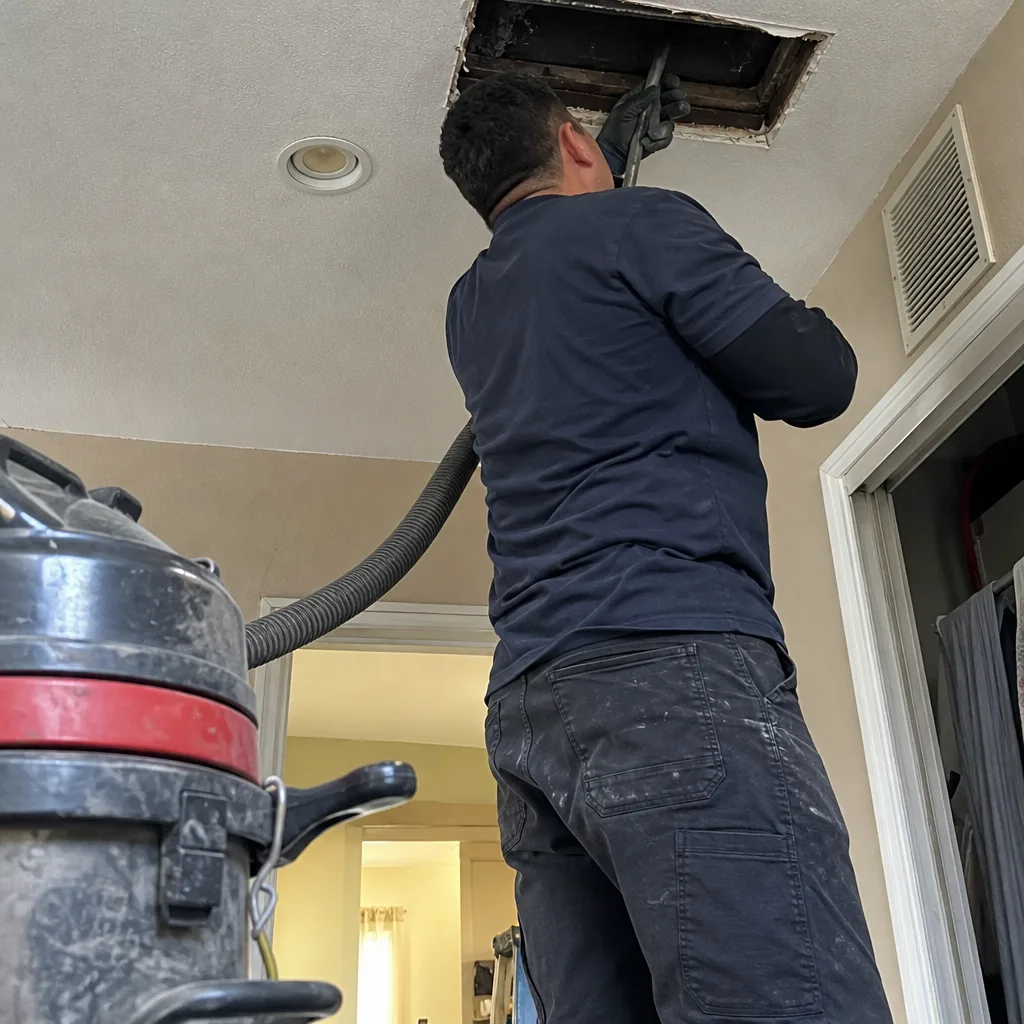 Before
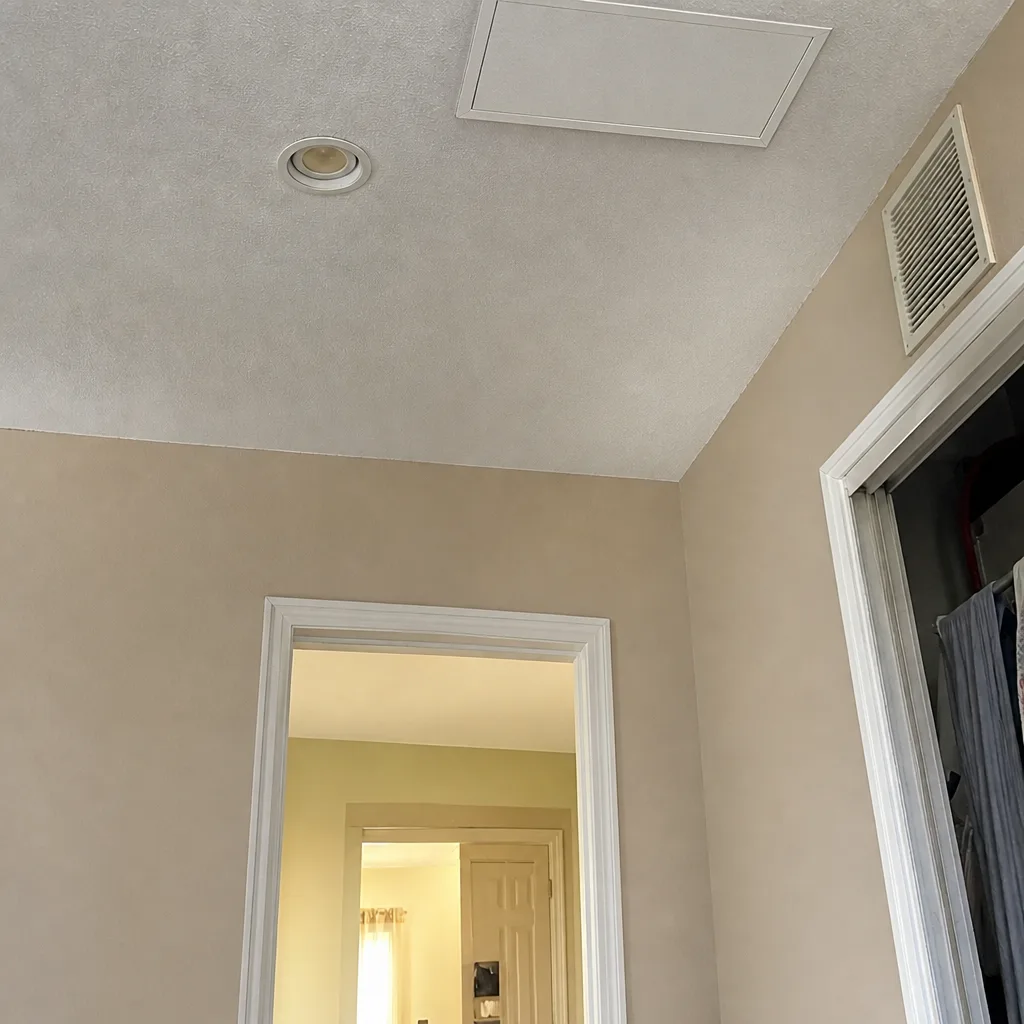 After
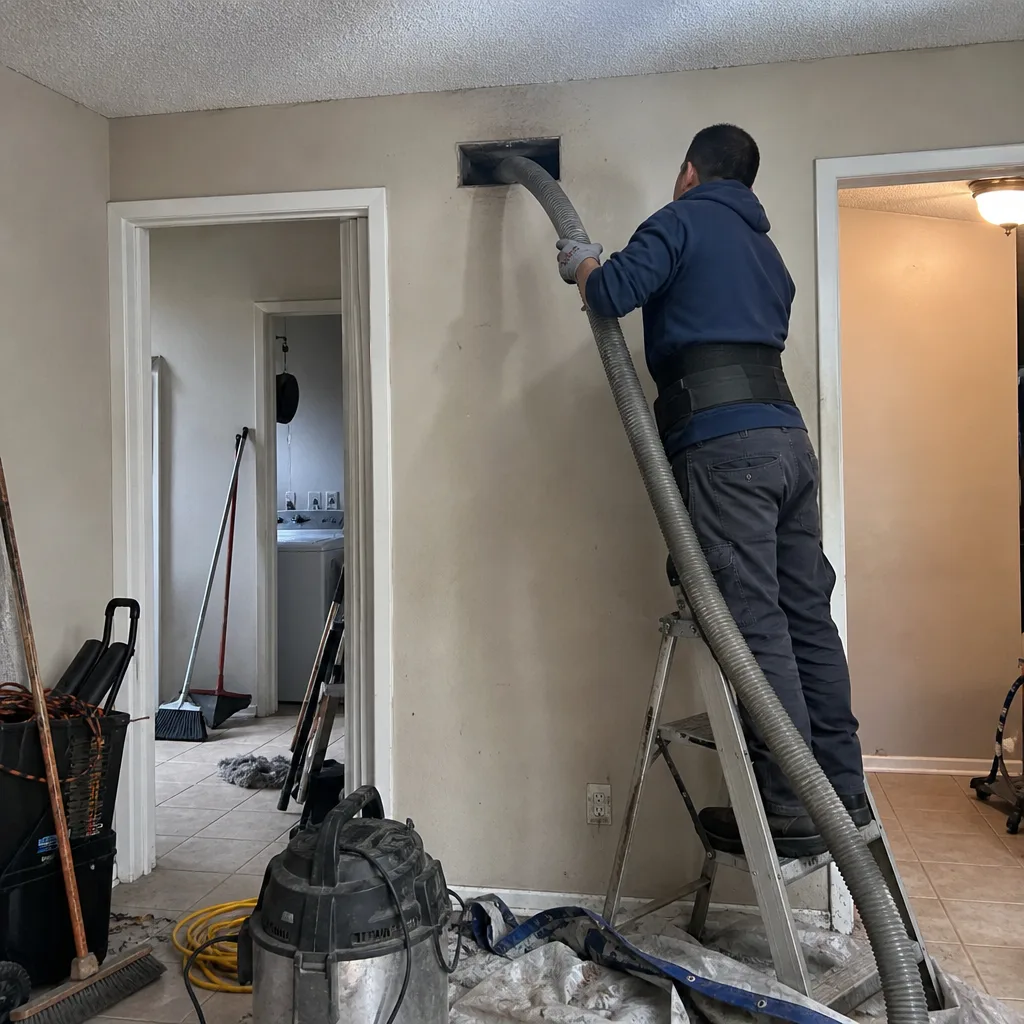 Before
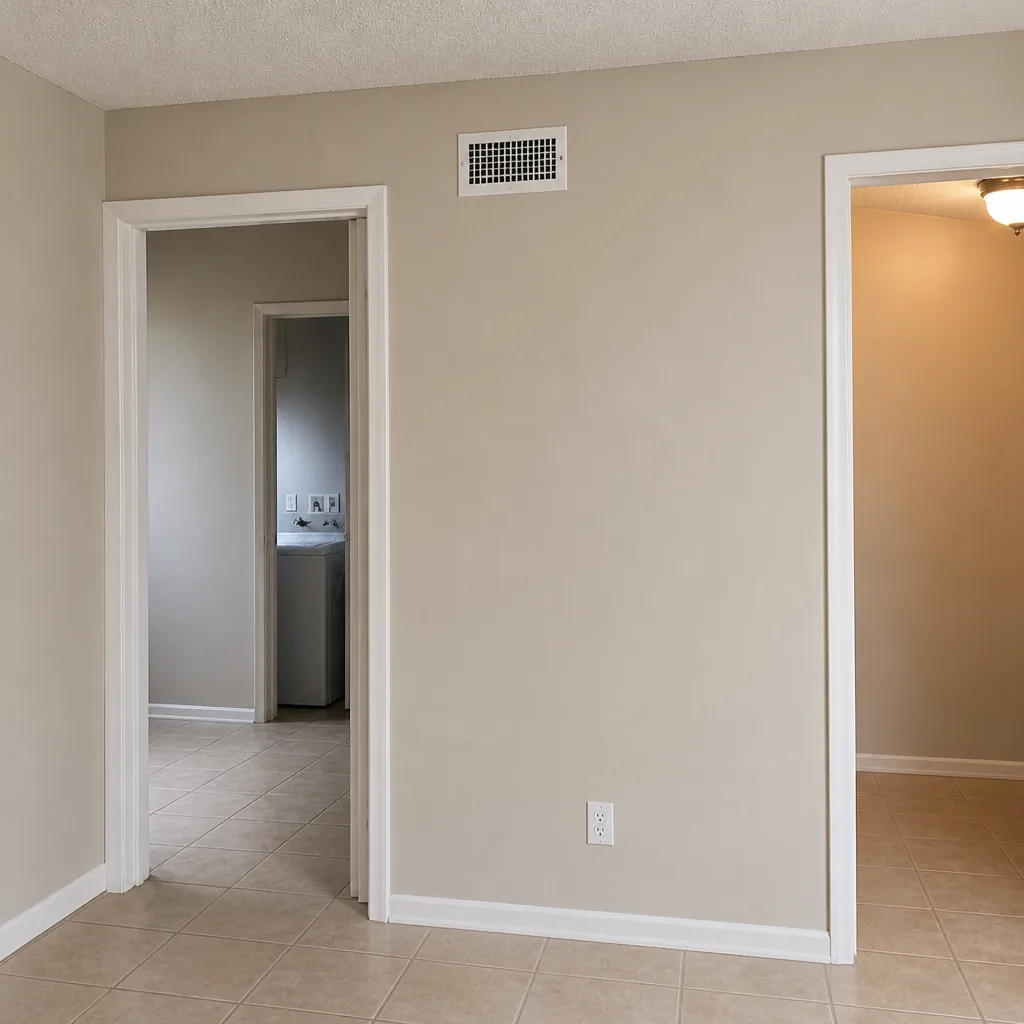 After
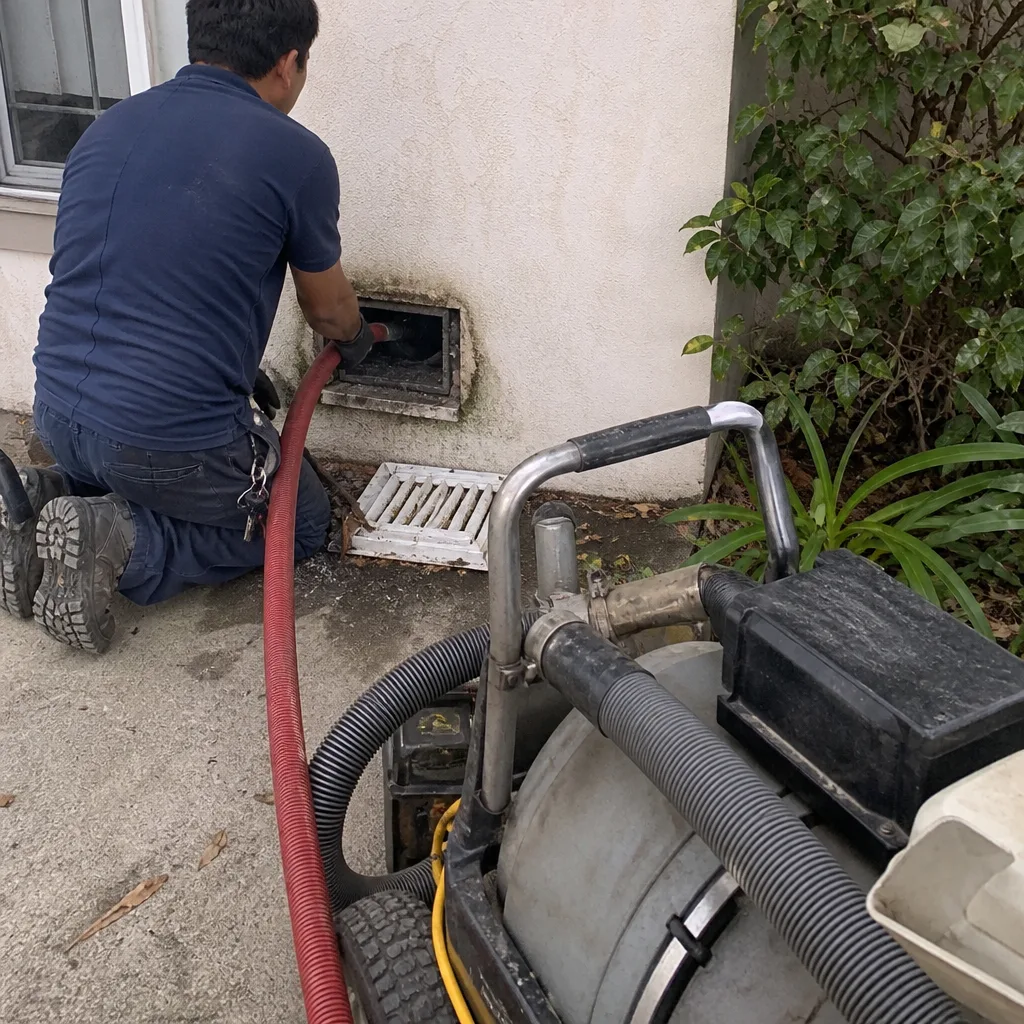 Before
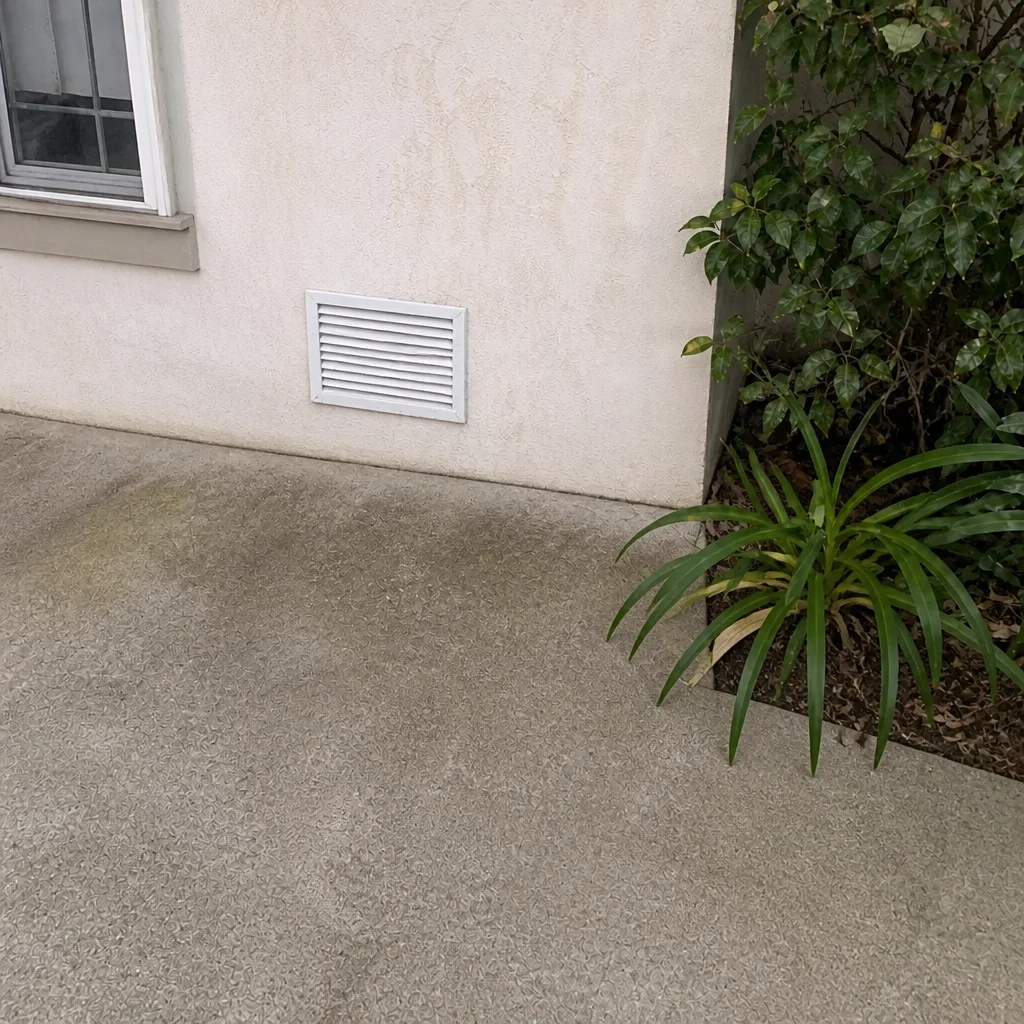 After
When to Call a Professional
Some conditions in a duct system are a routine scheduled service and some are a sign that something is wrong and needs to be diagnosed before it gets worse. Routine signs are visible dust on supply registers, a system that runs noticeably longer than it should, and the start of a new season. Less routine signs include visible dust on the supply grilles that returns within a few days of cleaning, a film on the coil, musty smells when the system starts, unexplained pressure changes across the house, and anything that followed a renovation or a new purchase. If any of these are present in your Westminster home, a trained technician can look at the system and tell you what the scope actually needs.
We don’t recommend step-by-step work here on your ventilation system. The air handler cabinet holds live electrical connections, and the coil and plenum contain conditions a homeowner can’t safely assess without training. We ask that you leave diagnosis and cleaning to a trained professional. Westminster Air Duct Cleaning Co offers free estimates in Westminster – call (855) 550-7935. We answer 24/7. Fast dispatch from 7am to 7pm, Sunday through Friday.
Frequently Asked Questions
Air duct cleaning in Westminster is priced per job, not per square foot or per vent, and the total depends on register count, configuration, access, and scope. A cleaning-only service costs less than full-system service because full-system service includes the handler cabinet, coil inspection, and duct sealing. A written estimate sets the final price. Call (855) 550-7935 for an exact quote – estimates are free.
Cheaper quotes are usually cheaper because the scope is smaller or the price is a starter figure that grows once the technician is inside. Per-vent add-ons, “additional services” not quoted in writing, and register counts that don’t match your home are the common patterns. The price isn’t lower – the initial number is. Ask for a flat price per system in writing before you book. Call (855) 550-7935 for a written scope and a flat quote.
The simplest verification is before-and-after photos of the same registers. Ask for them in writing when you book, and expect the technician to take them on the job. Beyond photos, a scope of work that states the register count and confirms cabinet and coil work is the second verification layer. If the contractor can’t provide either, the work is unverifiable. We take before-and-after photos of your own ducts on every full-system job – call (855) 550-7935 to see a sample scope.
Most homes need full-system cleaning every few years, and some never need more than a cleaning-only service. The honest interval depends on pets, occupants with allergies or asthma, recent renovations, and the condition of the HVAC system itself. Newly purchased homes and post-renovation homes are usually worth doing soon after the work settles. Call (855) 550-7935 to walk through your home’s specifics.
Homes built in that era in Westminster frequently have additions and remodels layered onto the original build, which means multiple generations of ductwork with mixed materials and irregular layouts. That’s a real cost variable: more places to inspect, more joints to verify, and more decisions on the walkthrough. A quote that doesn’t ask about additions or material mix is pricing a category, not your home. Call (855) 550-7935 with your home’s build era and the team will explain what the scope usually involves.
Cleaning-only covers the supply and return ducts. Full-system service also covers the HVAC cabinet and blower compartment, the coil inspection, the duct sealing where leaks are found, and the filter rack. Cleaning without sealing leaves the leaks that bring dust back. Full-system service is more, and the price difference reflects real work. Call (855) 550-7935 to compare the two paths side by side.
The Bottom Line
Duct cleaning cost in Westminster isn’t a number – it’s a scope, priced honestly. Every legitimate quote should establish register count and square footage first, then ask about configuration, access, material, and whether the HVAC cabinet and duct sealing are in scope. Every honest quote should state as a flat price per system, agreed before work starts, with before-and-after photos of your own ducts to verify. Older homes here carry a smaller set of predictable cost variables, and a contractor who prices them blind is either guessing low or padding high. Shipstone your quote against the protecting language above and the number on the page will tell you exactly what it’s worth. Our technicians have up to 11 years of experience reading those variables on walkthroughs across Westminster.
Contact
For a free estimate and a written scope of work that holds its price, call Westminster Air Duct Cleaning Co at (855) 550-7935. We answer 24/7. Fast dispatch from 7am to 7pm, Sunday through Friday. Whether you need dryer vent cleaning as a safety-critical service alongside the HVAC work, HVAC cleaning for the system and cabinet itself, or full-system duct service built around Rotobrush and Nikro equipment with Abatement Technologies filtration available for post-construction debris, the team will walk through what your home actually needs before any work begins. The local pro is licensed and insured as their state requires. One flat price per system agreed in writing, before-and-after photos of your own ducts, and a satisfaction guarantee on the work.
Written by the team at Westminster Air Duct Cleaning Co.