
Last updated November 25, 2026
 Whole-home duct cleaning
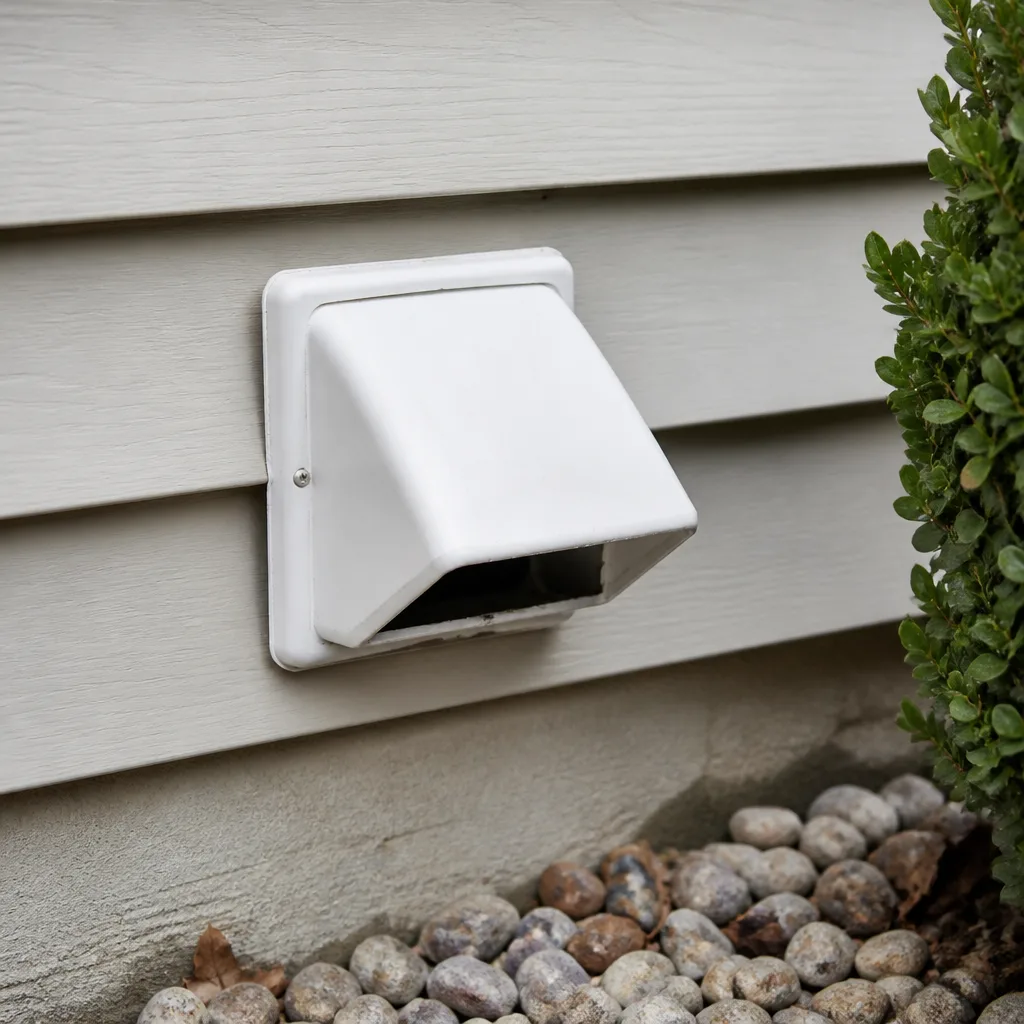 Dryer vent cleaning
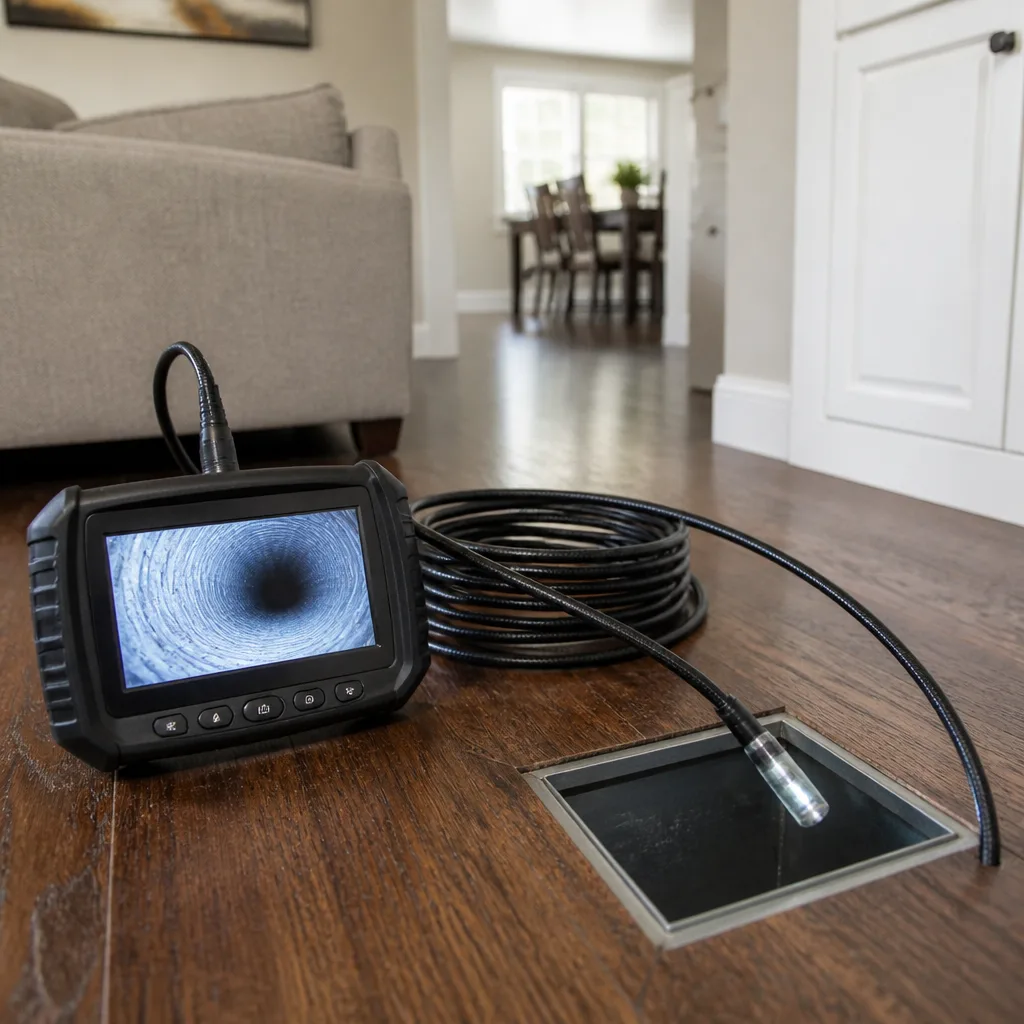 Camera inspection
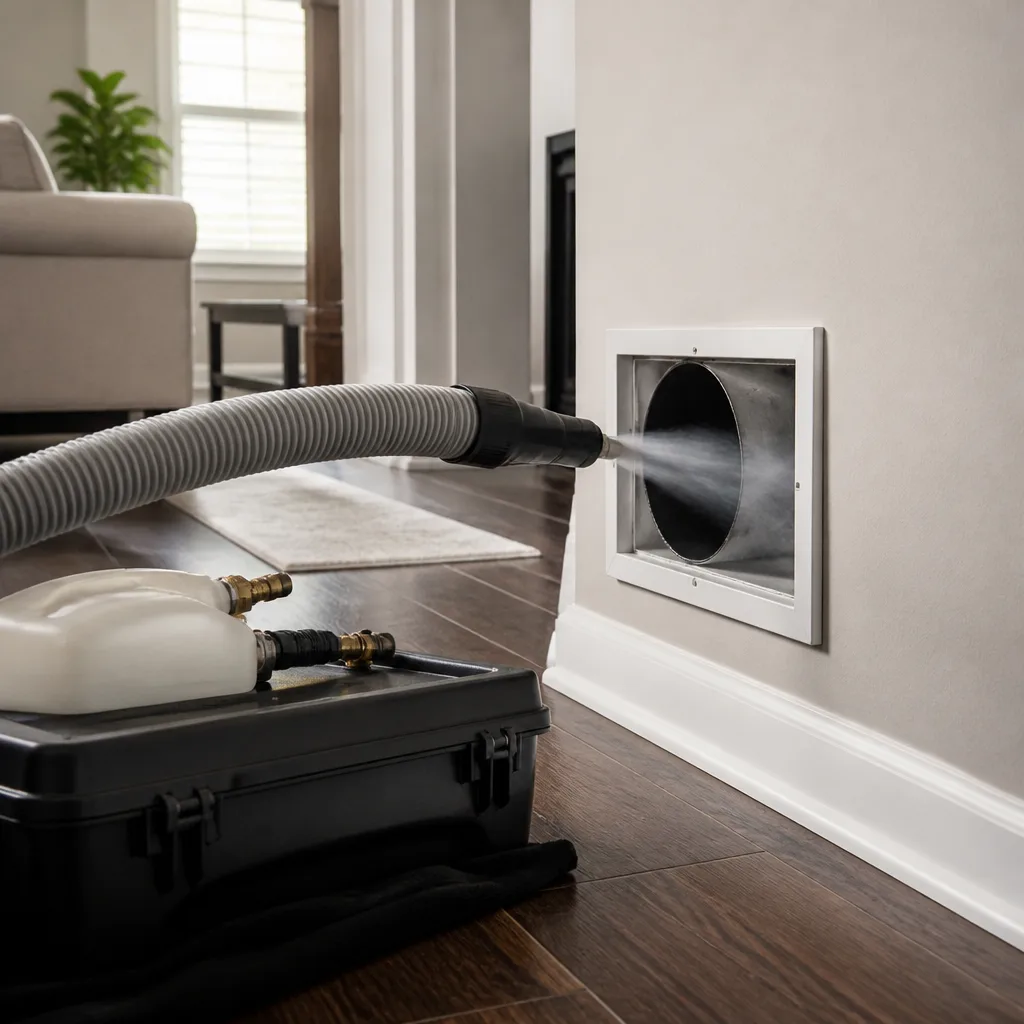 Sanitizing & deodorizing
Whole-system duct and dryer vent check with before-and-after photos - you see exactly what came out of your vents
That "$99 whole-house special" is a bait ad - the real number appears once they are in your hallway, or the "clean" is a shop-vac at the register. We photograph the inside of your ducts before and after instead.
Air Duct Cleaning Maintenance Checklist for Westminster Homeowners
Most duct maintenance advice you’ll find is a single line: change the filter every 90 days. That covers one point of roughly eleven in the air pathway running through your home. The air handler cabinet, the main trunk, each branch run, the flex connections between them, and every register grille all degrade on their own schedule, and none of them announce themselves through the filter. What follows is a component-by-component tracking system for Westminster homes. It separates the conditions you can observe yourself from the ones that need a contractor’s equipment, sets realistic intervals for this part of Orange County, and gives you a simple log that makes a technician’s diagnosis faster when you do call one.
Quick Answer
A complete air duct maintenance checklist has eleven checkpoints: air handler cabinet, filter slot, main trunk lines, branch ducts, flex duct connections, register grilles, return grilles, condensate area, dryer vent, outdoor vent terminations, and system odor. You can inspect about half of these yourself without tools, but cleaning, sealing, and repair of the duct interior requires contractor-grade extraction and rotary agitation equipment. In Westminster, check the filter monthly during wildfire season and inspect flex connections annually, since flexible duct is the failure point most often found in Southern California attics.
Styles & brands we work with
- Whole-home duct cleaning
- Dryer vent cleaning
- Camera inspection
- Sanitizing & deodorizing
Table of Contents
- Why Eleven Checkpoints Beat One Annual Service
- The Zone-by-Zone Inspection Checklist
- What You Can Check Without Tools
- Westminster Maintenance Intervals
- What to Log Between Professional Visits
- Checklist Items That Signal Repair, Not Cleaning
- What a Professional Visit Should Cover
- The Dryer Vent Belongs on the Same List
Why Eleven Checkpoints Beat One Annual Service
An HVAC system is not a single appliance. It’s a connected pathway, and the air that reaches your lungs passes through every segment of it. Debris that collects in a branch duct behaves differently from debris packed against the air handler cabinet, and a joint that has come apart behind a register grille is a different problem than dust on the grille face itself. Treating the whole system as one maintenance checkbox means those distinctions disappear.
In our experience, the failures that matter most are rarely the ones a homeowner notices first. A system can be quietly leaking twenty minutes of conditioned air into an attic before anyone registers the symptom. Splitting the pathway into eleven checkpoints does two things: it tells you where to look, and it tells you which findings belong to you and which belong to a technician.
Here’s the split that matters most:
- Homeowner-observable – filter condition, airflow balance, dust patterns around grilles, odor, condensation, visible flex duct condition, dryer vent airflow.
- Professional-required – interior duct cleaning, joint resealing, mastic repair, flex duct replacement, sanitizing, air handler coil cleaning.
- Judgment call – grille cleaning (you can do the face; caked debris behind the grille usually means a system-level problem).
Westminster homes sit in a particular position on this. The marine layer that moves in overnight keeps humidity higher than inland Orange County, and the 405 corridor pushes fine particulate into the air most days of the year. Both conditions load the system differently than a dry desert climate would. That’s why the intervals further down this guide are tighter in some areas than national advice suggests.
The Zone-by-Zone Inspection Checklist
Walk the system in order, from the equipment outward. Each zone gets its own pass. Don’t combine them. The point of separating the checkpoints is that a problem in one zone rarely looks like a problem in the next.
- Air handler cabinet. Open the access panel and look at the filter slot edges, the cabinet seams, and the base pan. Dust streaks at the seams mean the cabinet is pulling unfiltered air. Look for standing moisture in the pan; the marine layer humidity in Westminster makes condensate issues more common than homeowners expect.
- Filter slot. Check that the filter is seated flat with no gaps around the frame. A filter installed slightly off-frame lets air bypass the media entirely.
- Main trunk lines. Follow the largest duct runs through the attic or crawl space. Look for sagging, crushed sections, and joints where the tape or mastic has dried and separated.
- Branch ducts. Smaller runs splitting off the trunk. Count them. Note any that supply a room that never gets enough air.
- Flex duct connections. At each connection point where flex meets a rigid fitting, look for the inner liner pulling away, tie straps that have loosened, and sections that have begun to collapse or kink.
- Register grilles. Remove each grille and look at the boot behind it. Debris packed in the boot means the branch is delivering dust into the room; dust only on the grille face is usually a cleaning matter.
- Return grilles. Returns pull more volume than supplies. Check for debris accumulation and confirm the return path isn’t blocked by furniture or rugs.
- Condensate area. Look for standing water, dark staining, or a musty smell near the drain pan and line.
- Dryer vent. Separate from the HVAC system entirely, but on the same maintenance schedule. Check the exterior flap opens freely when the dryer runs.
- Outdoor vent terminations. Confirm vents on the exterior are clear and not screened or blocked by plant growth.
- System odor. Run the fan for ten minutes and note what the air smells like. Timing matters here and gets covered in the next section.
Running the walk-through once a year gives you a baseline. Running it twice (spring and early fall) catches flex duct problems before they combine with summer cooling load. Our technicians have up to 11 years of experience walking systems in Westminster, and the pattern they see most often is a flex connection that gave out during the previous season and pushed attic air into a bedroom for months before anyone connected the symptom.
What You Can Check Without Tools
You don’t need a manometer or a thermal camera to catch most serious duct problems. Four visible clues cover the majority of household-detectable issues.
Register airflow asymmetry. Hold a tissue or your hand in front of each supply register while the fan runs. Every register feeding rooms of similar size should deliver similar airflow. A register that’s noticeably weaker suggests a collapsed or disconnected branch duct, or a damper that’s been closed.
Visible dust rim patterns. Look at the ceiling or wall around each register. A dark ring around the frame means air carrying dust is bypassing the grille edge. A ring growing over time points to a sealing problem at the boot, not just dirt on the face.
Condensation near grilles. In humid months, a supply register that sweats means the air reaching it is very cold relative to room humidity. That can point to insufficient insulation on the branch duct or a system running short on refrigerant. Both need a professional look. In Westminster, the overnight marine layer can turn a minor insulation gap into a visible wet spot during cooling season.
Odor timing relative to system cycles. This is the one most homeowners miss. Note when you smell something: on fan startup, throughout the run, or only after the system shuts off. Odor at startup points to debris on the blower or coil. Odor throughout the run suggests contamination in the ductwork. Odor after shutdown often means moisture lingering in the cabinet or drain pan. Record the timing, not just the smell. It narrows the diagnosis faster than anything else you can write down.
If any of those four checks raises a question, that’s the point at which professional tools enter the picture. Rotobrush rotary brush systems and Nikro HEPA-rated vacuum equipment reach the parts of the system you can’t see; Abatement Technologies filtration units are what we use in homes with heavier contamination or post-renovation debris.
Westminster Maintenance Intervals
National duct cleaning advice tends to assume a climate that doesn’t quite look like this one. What follows are intervals tailored to conditions in Westminster specifically, with the reasoning stated so you can adjust if your home differs.
- Filter check: monthly, April through October. The 405 corridor carries a steady load of fine particulate that settles on filter media faster than the manufacturer’s 90-day rating assumes. Checking monthly lets you replace at the right moment instead of guessing.
- Filter check: every two months, November through March. Cooler months mean less dust in suspension and less cooling load. Winter here is mild, so there’s no freeze-thaw pattern to account for, but the wetter stretch does load filters with dust that clings.
- Full system inspection walk-through: twice a year. Once in early spring before cooling season, once in early fall before heating season. Both passes take about 20 minutes.
- Professional duct cleaning: every three to five years as a baseline. Shorten to two to three years for households with pets, recent renovations, or allergy-sensitive occupants.
- Wildfire season adjustment. When fires burn in the region and smoke settles over Orange County, expect to change or clean filters every three to four weeks until air quality clears. If you see smoke haze inside the house with the system off, run the fan on continuous mode with a fresh filter so the media captures what’s coming in, and then have the system cleaned after the season.
- Flex duct connection inspection: annually. Attic temperatures in Westminster swing enough through the year that flex duct connections flex, and material that flexes eventually separates. A connection that looked fine in January can be disconnected by July.
- Dryer vent cleaning: annually for typical households, more often for high-volume laundry. The dryer vent isn’t part of the HVAC system, but it’s part of the same maintenance discipline, and it’s the one item on the list with a fire-safety consequence.
One adjustment worth making for Westminster homes specifically: if your property was built before the late 1990s, expect the duct runs to be a mix of rigid metal trunk and flexible branches. Rigid metal holds up well but loses joint integrity at the seams over time. Flex fails at the connectors. Both fail silently. That combination is why the annual connection inspection is not optional here.
What to Log Between Professional Visits
A short log turns a technician’s diagnosis from a guessing exercise into a short investigation. You don’t need an app. A notebook on the utility room shelf works. What matters is consistency, not format.
Record five things, and record them the same way every time:
- Filter changes. Date and filter rating (MERV number if printed on the package). Note whether the filter came out grey, dark, or clean.
- Odor events. Date, description of the smell, and the timing relative to the system cycle (startup, mid-run, shutdown).
- Airflow changes. Any register that felt weaker than the last time you checked. Note the room.
- Condensation or moisture sightings. Where and when.
- Anything that happened to the house. Renovation work, new furniture, a pet added, roofing work. Duct contamination correlates with these events far more than with calendar time.
When a technician arrives with a log in hand, the conversation goes differently. Instead of asking “what’s the problem,” the technician can ask about specific entries. The log is also the only reliable way to tell whether the problem is chronic or recent. A homeowner with a stack of dated entries gives a technician a timeline; without one, everything gets treated as if it started yesterday.
We’ll say this plainly, because it’s the difference between a real maintenance record and a filter-changing habit: the logged observations are what let us tell you whether the system needs a standard clean or a sealing and repair job. We’d rather you arrive at the second appointment with useful data than start over from scratch.
Checklist Items That Signal Repair, Not Cleaning
Cleaning removes debris. Repair addresses a pathway that’s no longer intact. The two look similar from a distance and are not the same job. Duct cleaning without sealing leaks is half a job, and if your checklist walk turns up any of the following, cleaning alone won’t fix it.
- Flex duct collapse. A section of flex duct that has kinked or flattened restricts airflow the way a partially closed damper does. Cleaning can’t restore the shape. The section needs replacing, and any kink should be treated as urgent because the restriction raises pressure on the blower.
- Disconnected joints. A gap where the flex meets a fitting delivers attic air into the branch and conditioned air into the attic. Those gaps are common and invisible from the living space. They need to be reconnected and properly sealed, not vacuumed around.
- Mastic failure. The paste-like sealant used at joints dries and cracks over time. Cracking at multiple joints across the trunk suggests a sealing pass over the whole system, not spot fixes.
- Tape lifting at cabinet seams. Where metal duct tape has lost its bond, air escapes at pressure. Reseal with proper mastic, not more tape; the tape will fail again on the same timeline.
- Rusted or water-stained duct sections. Moisture reaching the duct exterior means insulation is compromised or condensate is draining wrong. Cleaning it and leaving the moisture source is a losing fight.
- Crushed return path. A return duct that has been stepped on or compressed in the attic can’t deliver enough air back to the equipment. Replacing that section often resolves air-balance complaints that looked like a cleaning issue.
Westminster homes with attic-mounted air handlers tend to present flex duct failures more often than homes with systems in closets. The attic is a harsher environment year-round, and flex duct doesn’t care for it. Duct repair and sealing is a core service for that reason, and it’s why we bring the repair capability on the same visit as the cleaning rather than leaving it for a second appointment.
If your system has persistent problems following the last professional cleaning, the maintenance log will help point the conversation to repair. Call (855) 550-7935. We answer 24/7. Fast dispatch from 7am to 7pm, Sunday through Friday.
What a Professional Visit Should Cover
What you should expect a professional duct cleaning visit to look like is straightforward, and it’s worth knowing before you book one. A visit that stops at vacuuming the visible ductwork leaves most of the system untouched. A visit that covers the entire air pathway, from the HVAC cabinet to the vent grille, is the standard worth insisting on.
A good professional visit does this, in this order:
- Inspects the system before starting, including the air handler, trunk, branches, and connections.
- Uses contractor-grade extraction and rotary agitation equipment, not a shop-vac setup. Rotobrush systems and Nikro HEPA-rated vacuums are the baseline.
- Cleans the air handler cabinet and coil surfaces, not only the duct interior.
- Cleans returns along with supplies. Returns pull airborne material first, so skipping them means the supplies recontaminate.
- Seals any connections found failing, and documents what was repaired.
- Shows before-and-after photos of your system’s duct interior, taken during the visit.
- Discusses filtration upgrades if the filter load suggests the current media isn’t adequate for the household.
The full list of what we do is on our air duct cleaning page, and the equipment and approach we bring to each stop is on our main Westminster Air Duct Cleaning Co page. For homes that need filtration and humidity work beyond a cleaning, Honeywell and Aprilaire products give a straightforward path forward. Sanitizing with Guardsman-grade treatments is available when the inspection shows microbial growth rather than plain dust.
The other thing a good visit does is explain what it found. A technician who can’t tell you which connection was failing, or why the return path was restricted, hasn’t finished the job. Specifics matter more than the receipt.
The Dryer Vent Belongs on the Same List
The dryer vent is not part of your HVAC system, but it’s part of the same maintenance discipline and it carries the higher risk of the two. A clogged dryer vent restricts exhaust airflow and creates a fire hazard that builds up silently over time. Homeowners in Westminster should treat dryer vent cleaning as an annual item alongside duct maintenance, and more frequently if the household does heavy laundry volume.
The check you can run yourself takes thirty seconds. With the dryer running, step outside and confirm the exhaust flap is open and moving. If it’s barely hanging open, or stays shut with the dryer running, exhaust is backing up. If the flap opens fully but the airflow feels weak, there’s a restriction in the run. Either way, the vent needs professional cleaning.
Two more indicators worth putting on the log:
- Laundry taking noticeably longer to dry than it used to, with no other change to the dryer or the load.
- The top of the dryer feeling unusually warm to the touch after a cycle.
Neither of those is a diagnosis on its own. Together they’re a strong signal to have the vent cleaned. The same visit discipline applies: the run is cleaned end to end, the exterior flap is checked, and any crushed flex in the run is addressed rather than vacuumed around.
If a remodel is in progress or recently finished, put the dryer vent on the immediate list, not the annual one. Construction dust settles into the run the same way it settles into ductwork.
Common Mistakes to Avoid
- Changing the filter without checking the slot. A filter seated with a gap around the frame lets air bypass the media. You end up with a clean filter and an unprotected system. Reseat it flat every time, and feel the edges.
- Assuming one company covers the whole job. Booking a duct cleaner who arrives without repair capability means a failed flex connection discovered mid-visit gets deferred to a second appointment with a different trade. Duct repair and sealing needs to be in the same visit.
- Skipping the return side. Many homeowner side inspections check the supplies and ignore the returns. Returns pull the dust first, and cleaning supplies without returns means the same material circulates back in a week.
- Treating the dryer vent as a separate winter chore. The dryer vent is the one item on this checklist with a fire-safety consequence. Waiting for “when I get to it” is the wrong instinct in Westminster, where the same annual schedule handles both systems.
- Setting the schedule by the calendar alone. A renovation, a new pet, or a regional wildfire changes the interval. Adjust the schedule to events, not only to months.
- Not logging the timing of an odor. Odor on startup and odor after shutdown point to different causes. Writing down “smells musty” without the timing loses the most useful part of the observation.
- Assuming a filter is a solution to a duct problem. A better filter catches what reaches it. A leaky duct connection pushes air around the filter entirely. If the log shows recurring dust despite frequent filter changes, the problem is upstream.
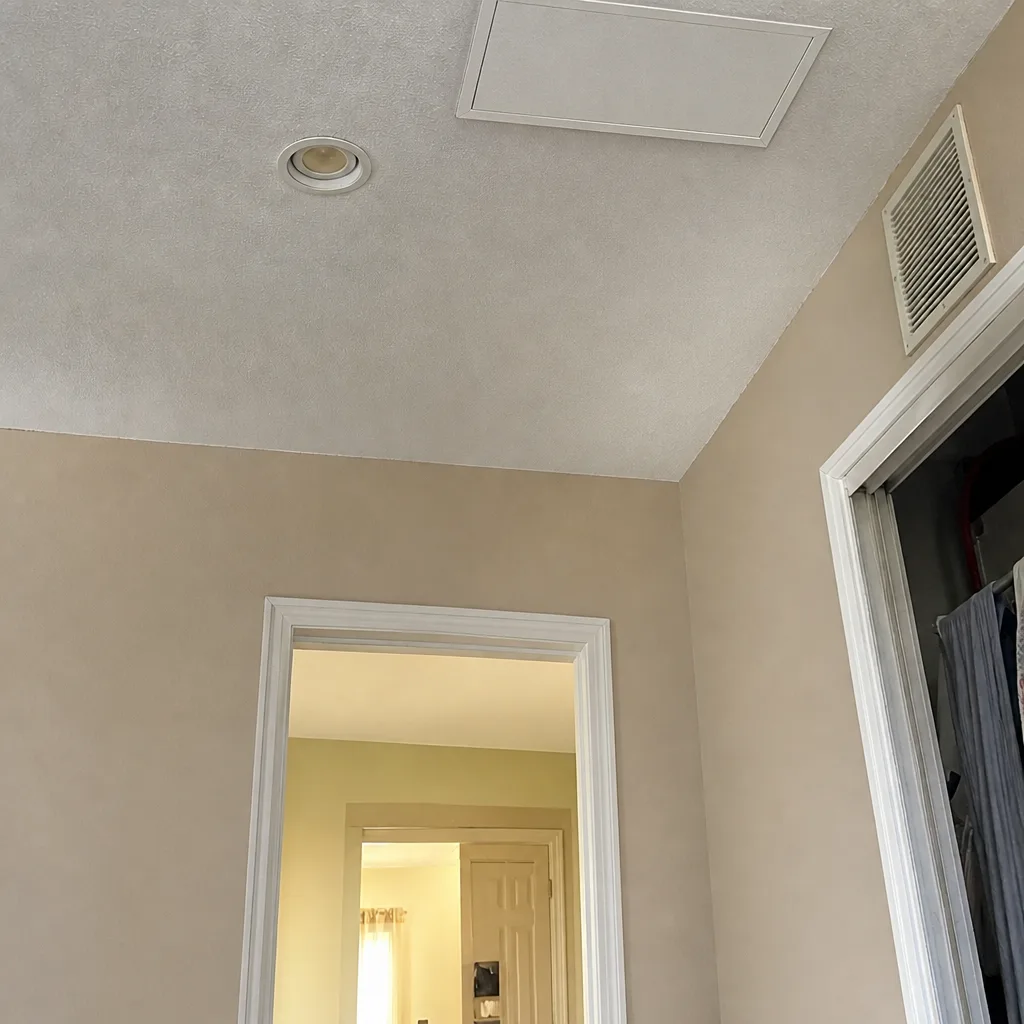
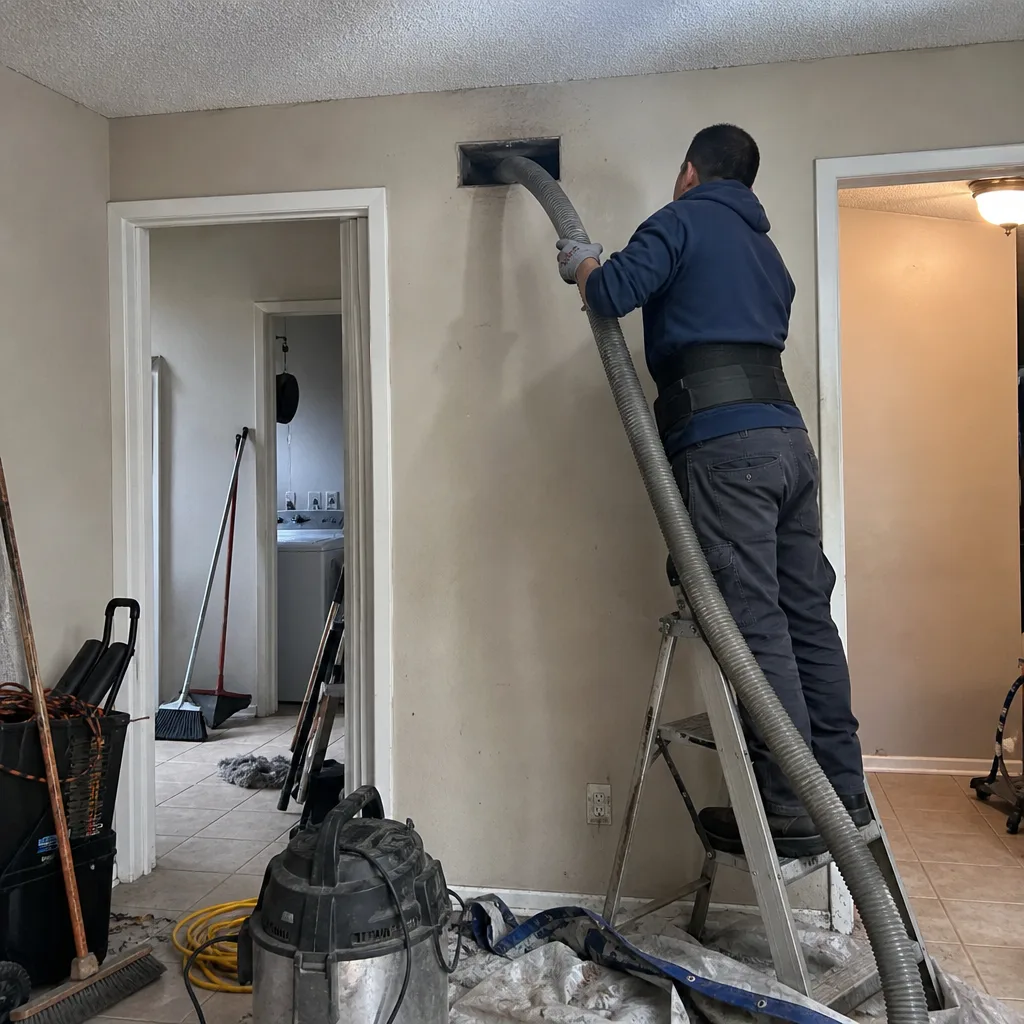
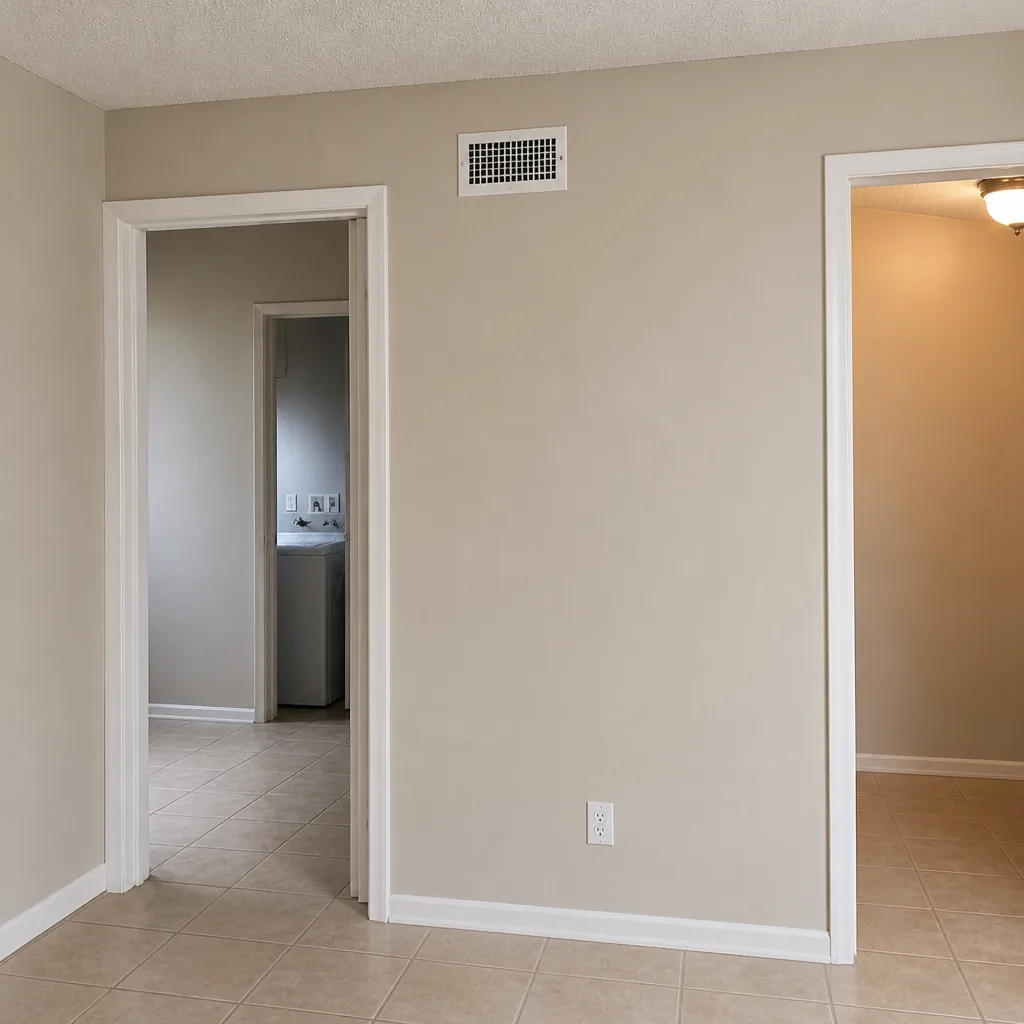
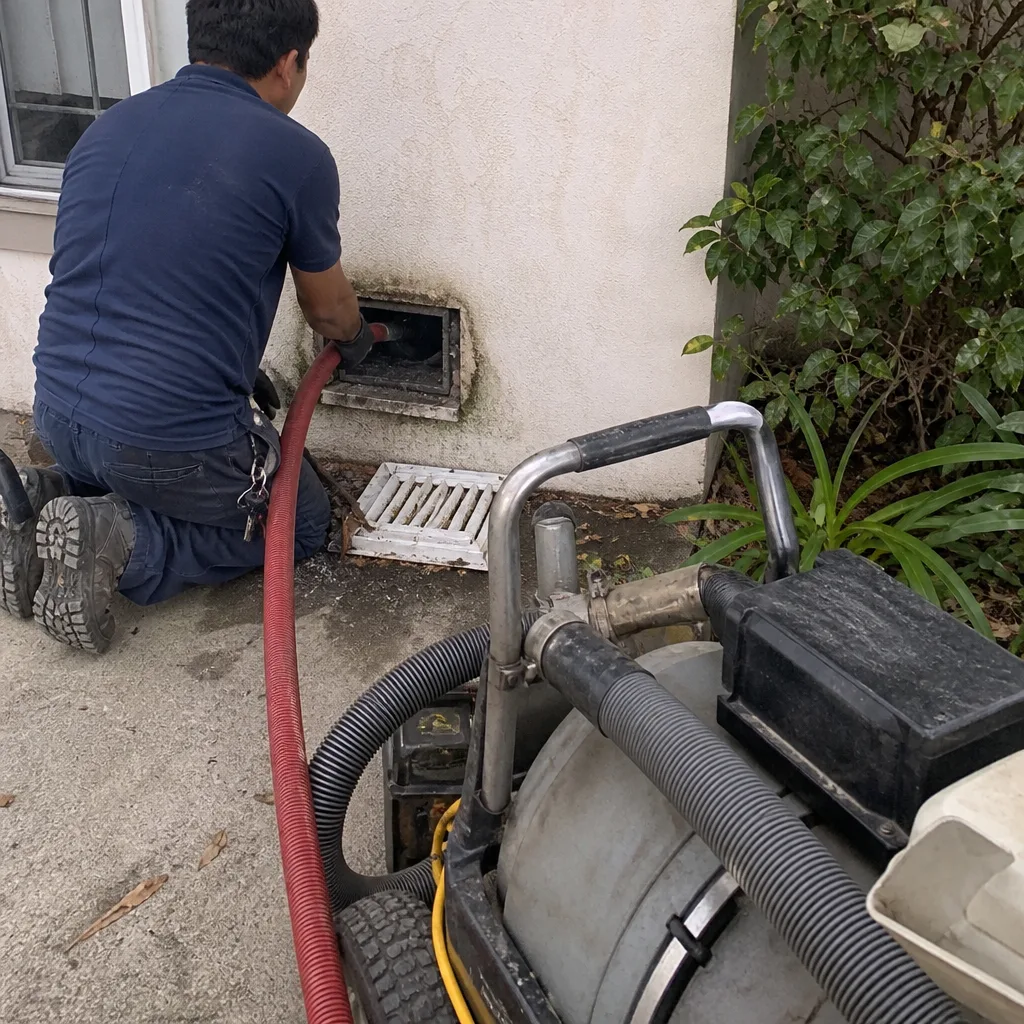
See the difference
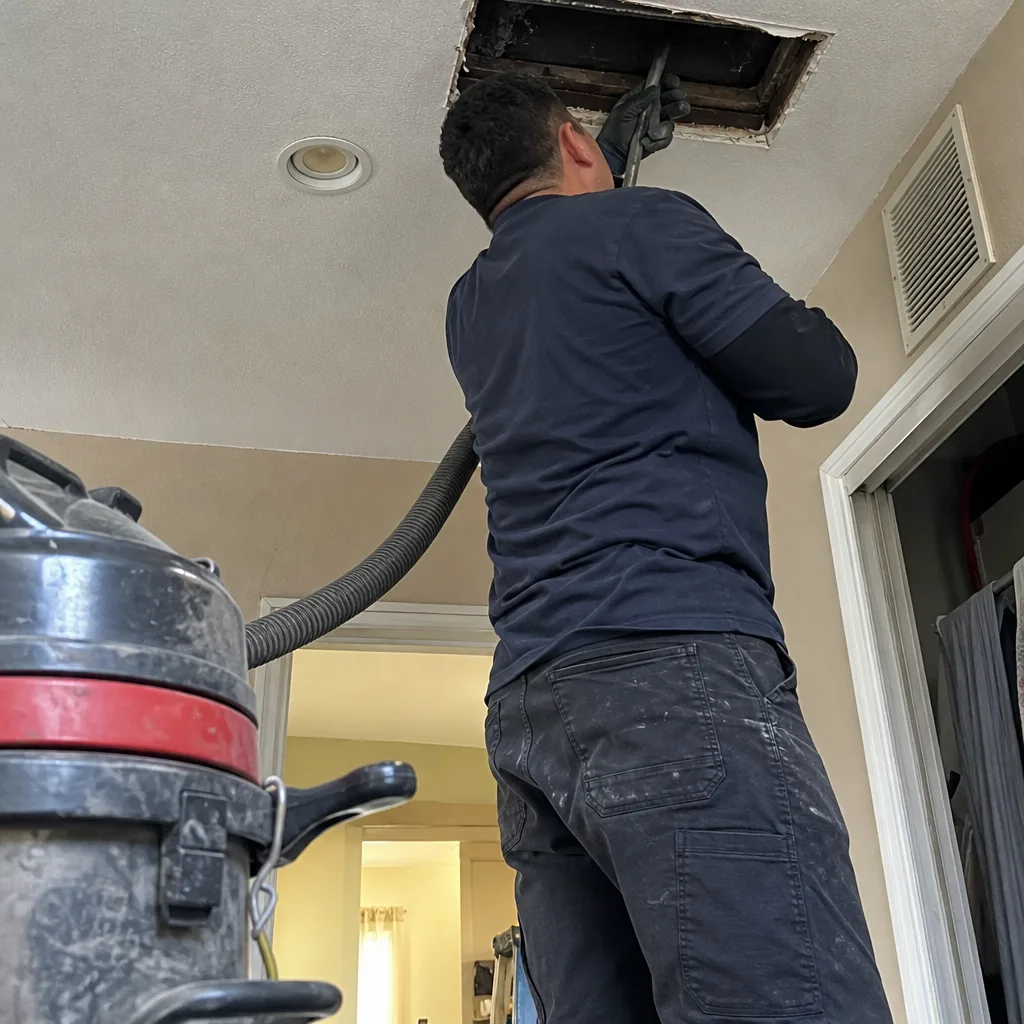 Before
 After
 Before
 After
 Before
 After
When to Call a Professional
Call when the maintenance walk turns up something the checklist can’t resolve. Specifically: a flex connection that looks separated or collapsed, a register with clearly weaker airflow than the others, an odor that comes on at the start of every fan cycle, condensation around a supply register in humid months, visible debris packed behind a register boot, or an annual inspection that finds mastic cracking at multiple joints. Post-renovation is another clear trigger, because construction dust doesn’t respect filter rating. Westminster Air Duct Cleaning Co offers free estimates in Westminster, and every estimate is set per job in writing before any work begins. We cover HVAC cleaning alongside duct cleaning and dryer vent work, so the whole pathway is handled in one visit. Call (855) 550-7935 to book an estimate.
Frequently Asked Questions
Every three to five years is the baseline for a Westminster home with no special conditions. Shorten that to two to three years if you have pets, recent renovations, allergy-sensitive occupants, or the nearby wildfire season has pushed heavy smoke through your area. The annual inspection walk catches problems between cleanings. Call (855) 550-7935 for an exact quote; estimates are free.
Typical pricing for whole-home duct cleaning in the Westminster area runs based on the size of the system, the number of branch runs, and whether repair or sealing is needed. We price per system, not per vent, because per-vent pricing incentivizes a fast sweep and leaves the connections untouched. Call (855) 550-7935 for an exact quote; estimates are free.
Cheap quotes often assume only the accessible duct faces get cleaned, not the air handler cabinet, returns, or flex connections. The low number covers less of the system. Ask what’s included on the visit before comparing numbers, and ask which equipment is used. Rotobrush and Nikro equipment is the professional baseline; a shop-vac setup won’t reach the interior surfaces. We price per system with the full pathway included. Call (855) 550-7935 for an exact quote; estimates are free.
Insist on before-and-after photos of your own ductwork, taken during the visit. A photo of your air handler cabinet before and after, and one of the trunk after cleaning, is evidence you can review. It’s also why we don’t rely on generic marketing photos: the photos on your invoice should be of your system. Call (855) 550-7935 for an exact quote; estimates are free.
Reducing accumulated dust and addressing duct leakage that pulls unfiltered attic air into the living space can reduce the volume of particulate circulating indoors. The results depend on what the inspection finds. If the log shows recurring dust despite regular filter changes, the cause is usually a sealing issue rather than a cleaning issue. A proper clean plus resealing addresses both. Call (855) 550-7935 for an exact quote; estimates are free.
Cleaning removes accumulated debris from the interior surfaces of the system. Repair addresses the failure of the pathway itself, such as a disconnected flex connection, a collapsed branch, or cracked mastic at joints. Cleaning a system with a failing connection doesn’t fix the leak, and the system recontaminates from attic air. Duct cleaning without sealing leaks is half a job, so we handle both in a single visit when the inspection calls for it.
No. The checklist catches the problems a homeowner can see and gives a technician accurate data on arrival. Interior surfaces of the duct system require contractor-grade extraction and rotary agitation to clean effectively. The two work together: the checklist keeps you informed between visits, and the professional visit handles what the checklist can only flag. Call (855) 550-7935 for an exact quote; estimates are free.
The Bottom Line
Eleven checkpoints is the right way to think about duct maintenance, not one filter change a year. Walk the system twice a year, check the filter monthly through cooling season in Westminster, and log what you observe with dates and timing. Keep the annual flex duct and dryer vent inspections on the same calendar. When the checklist turns up a flex collapse, a disconnected joint, or cracking mastic, that’s a repair call, not a cleaning call. Duct cleaning without sealing leaks is half a job, and we do both. Call (855) 550-7935 for a free estimate on the full pathway.
For questions outside a scheduled estimate, we answer 24/7. Fast dispatch from 7am to 7pm, Sunday through Friday.
Written by the team at Westminster Air Duct Cleaning Co.